California Water & Wastewater Operator Training: CEUs, CWEA Certifications, Contact Hours & Renewal
.avif)
The training you need depends on the credential you hold. A California drinking water operator follows different renewal rules than a wastewater treatment operator, and a collections or maintenance professional with a CWEA certification follows another set of requirements. This guide explains California water operator training, wastewater operator training, CEUs, contact hours, educational points, certification renewal, and CWEA certifications in practical terms for operators and supervisors.
Do California Water and Wastewater Operators Need CEUs?
The short answer is: it depends on the certification.
California drinking water treatment and distribution operators must complete continuing education contact hours for renewal. The required number depends on certification grade.
California wastewater treatment operators are also certified by the State Water Board, but the renewal process is different. Wastewater certificates are valid for three years, and the current renewal requirements do not list a recurring CEU or contact-hour requirement. Education is still important for qualifying for certification and advancing to higher grades.
CWEA certifications are different again. CWEA requires continuing education for certification holders in areas such as collections, laboratory, maintenance, instrumentation, and environmental compliance.
So before asking, “How many CEUs do I need?” ask: Which certification am I renewing?
CEU Requirements for California Drinking Water Operators
California's Drinking Water Operator Certification Program, or DWOCP, certifies water treatment and water distribution operators.
Certificates are renewed every three years. Operators must submit the required application and fee and document the appropriate continuing education contact hours.
California generally uses the term contact hours rather than CEUs in its drinking water renewal guidance. You can review current renewal requirements and acceptable training information on the Drinking Water Treatment and Distribution System Operators page.
Water Treatment Operator Certifications — T1 Through T5
California water treatment certifications range from T1 through T5.
As operators advance, they are expected to understand increasingly complex treatment processes, process control, regulatory requirements, equipment, and troubleshooting.
Useful water treatment operator training may cover coagulation, flocculation, sedimentation, filtration, disinfection, water chemistry, pumping, instrumentation, and operator math.
Operators preparing for certification can explore Watura's Water Treatment Grade I–III Exam Prep.
Water Distribution Operator Certifications — D1 Through D5
California water distribution certifications range from D1 through D5.
Distribution operators may work with mains, valves, hydrants, storage, pumps, pressure zones, meters, flushing, disinfection, and water quality monitoring.
As operators progress to higher grades, stronger knowledge of hydraulics, system operations, asset management, water quality, and supervisory responsibilities becomes more important.
Watura's Water Distribution Grade I–III Exam Prep covers distribution systems, pumping, electrical systems, laboratory procedures, mapping, asset management, cybersecurity, and math.
What About CEUs for California Wastewater Operators?
California wastewater treatment operators are certified through the State Water Board's Wastewater Operator Certification Program, or WWOCP.
There are five certification levels, Grades I through V. Operators must meet applicable education and experience requirements and pass the required examination.
Unlike California drinking water renewal, the current wastewater renewal process does not require a recurring number of CEUs or contact hours. Wastewater certificates are valid for three years and must be renewed before they expire.
Training still matters. Educational points can help operators qualify for certification or higher grades, while technical training improves exam readiness and plant performance.
Wastewater Treatment Operator Grades I Through V
California wastewater certification progresses from Grade I to Grade V.
Higher grades require greater technical knowledge, operating experience, and responsibility. Operators moving through the grades should build skills in:
CEUs, Contact Hours, and Educational Points: What’s the Difference?
A CEU, a contact hour, and a wastewater educational point are not automatically interchangeable.
Each certification program defines how training is measured and accepted. Never assume that a course “counts” simply because it provides a completion certificate.
What Is a CEU?
CEU stands for Continuing Education Unit. Professional organizations use CEUs to document continuing education, but the exact calculation depends on the certifying organization. CWEA currently requires 12 contact hours, equal to 1.2 CEUs, every two years for certification holders. California wastewater certification rules can also use CEUs when calculating certain educational points for qualifying education.
What Is a Contact Hour?
A contact hour represents participation in an organized training activity.
For California drinking water operators, eligible courses, seminars, workshops, in-house training, college courses, correspondence courses, and online training may qualify when they meet State Water Board requirements.
Training must also be relevant to drinking water operations. Wastewater classes do not count toward California drinking water continuing education requirements.
What Are Educational Points for California Wastewater Operators?
Educational points are used in California's wastewater operator certification framework to help operators qualify for initial certification and obtain higher certification grades.
Depending on the grade, applicants may need approved education in addition to experience and examination requirements.
Qualifying college courses, CEUs, and approved wasteoperatorswater-related training may contribute educational points. Operators pursuing a higher wastewater grade should verify exactly how their education will be credited before enrolling.
How Many Contact Hours Do California Water Operators Need?
California drinking water treatment and distribution operators currently need:
These requirements apply to both treatment and distribution licenses.
When Do Operators Need to Complete Their Training?
California drinking water certificates are renewed every three years.
Operators should complete eligible training within the applicable renewal period and retain the required documentation.
Waiting until a certificate is close to expiration creates unnecessary risk, especially for supervisors managing staffing requirements. If a certificate expires, the operator cannot simply continue working under the expired credential while catching up on training.
Why You Should Track Training Throughout the Certification Cycle
Keep a record of completed courses, dates, contact hours, and certificates.
For supervisors, tracking this information across the team makes it easier to identify upcoming renewal needs before they affect scheduling or regulatory coverage.
A simple habit helps: complete the course, save the certificate, and know which certification you plan to use it for.

What Training Counts Toward California Water Operator Renewal?
California drinking water continuing education must be relevant to the operation of a drinking water treatment facility or distribution system.
Acceptable topics can include treatment processes, water quality, chemistry, maintenance, equipment, instrumentation, distribution operations, regulations, and safety.
Operators should review current State Water Board guidance through the Drinking Water Operator Certification resources.
Water Treatment Training Topics
Useful water treatment operator training connects theory to operating decisions.
Topics may include coagulation, flocculation, sedimentation, filtration, disinfection, chemical feed, water chemistry, membranes, groundwater treatment, surface water treatment, and process control.
Watura's Drinking Water training catalog includes courses covering treatment, distribution, disinfection, hydraulics, chemistry, and related topics.
In California, water treatment operators can also earn credits when taking distribution courses.
Treatment Processes
Operators benefit most when they understand how processes affect one another.
Poor coagulation can create filter problems. Changing source-water quality can affect chemical demand. Disinfection performance can change as pH, temperature, and water quality shift.
Training should help operators understand those relationships, not simply memorize process definitions.
Water Quality and Process Control
Operators regularly work with turbidity, pH, disinfectant residual, chemical dose, sampling data, and laboratory results.
The key skill is interpretation. Good operational training helps operators understand when a number is normal, when a trend is developing, and when corrective action may be needed.
Water Distribution Training Topics
Water distribution operator training can include mains, valves, hydrants, storage, pump stations, meters, pressure, flushing, system maps, and water quality.
In California, water distribution operators can also earn credits when taking treatment courses.
Distribution System Operations
Distribution operators need to understand how water moves through the system and how operating decisions affect pressure, storage, water age, and customers.
Training in pressure zones, valve operations, pumping, flushing, storage, and system maintenance helps operators make better field decisions.
Watura's courses cover topics such as pumps operation and maitenance, water hammer, pressure, flow, and electrical fundamentals.
Distribution Water Quality
Water quality can change after water leaves the treatment plant.
Distribution operators should understand chlorine residual, bacteriological sampling, cross-connection control, flushing, storage conditions, and customer complaints.
Combining hydraulic knowledge with water-quality knowledge helps operators identify problems faster.
Safety Training for Water Operators
Water operators work around chemicals, electrical equipment, rotating machinery, confined spaces, traffic, and pressurized systems.
California currently allows qualifying safety training toward drinking water continuing education, but no more than 25% of the required hours may come from safety topics.
Watura's Plant Safety course covers PPE, chemical and chlorine safety, confined spaces, emergency response, SDS use, and safe work practices.
California Wastewater Operator Certification and Training
California wastewater operators follow the State Water Board's Wastewater Operator Certification Program.
The program sets education, experience, examination, certification, and renewal requirements for Grades I through V.
How California Wastewater Operator Certification Works
Operators must meet the minimum requirements for the grade they are pursuing.
Those requirements can include approved education, qualifying operating experience, and passing an examination.
Current applications, exam information, certification requirements, and renewal resources are available through the California Wastewater Operator Certification Program.
Training for Wastewater Certification and Career Advancement
Wastewater operators need knowledge across the full treatment process.
Watura's Wastewater Treatment Grade I–III Exam Prep covers wastewater treatment, collections, pumps, electrical systems, laboratory procedures, asset management, emergency preparedness, cybersecurity, and math.
Wastewater Treatment Processes
Important topics include primary treatment, activated sludge, clarifiers, aeration, nutrient removal, solids handling, and process control.
Operators should understand how process changes affect the rest of the plant rather than treating each unit process separately.
Wastewater Troubleshooting
Wastewater plants rarely behave exactly like textbook examples.
Good troubleshooting means identifying symptoms, reviewing data, considering likely causes, and making controlled adjustments instead of reacting to every change.
That skill becomes increasingly important for experienced operators, leads, and supervisors.
CWEA Certifications for California Wastewater Professionals
The California Water Environment Association (CWEA) offers technical certifications for several specialized wastewater careers.
Current programs include:
- Collection System Maintenance
- Laboratory Analyst
- Mechanical Technologist
- Electrical & Instrumentation Technologist
- Environmental Compliance Inspector
- Advanced Water Treatment Operator.
Although people sometimes call them “CWEA licenses,” CWEA certifications is the correct term. Since September, 8th, 2026, contact hours for these licenses can be tracked with a free Watura account using the contact hour tracker.
Are CWEA Certifications the Same as California Operator Licenses?
No.
State Water Board certifications are regulatory operator credentials. CWEA certifications are professional credentials for specialized wastewater vocations.
Some California utilities use CWEA certifications in hiring and promotion requirements, so many professionals hold both State Water Board and CWEA credentials.
CWEA Collection System Maintenance Certification
CWEA's Collection System Maintenance certification covers professionals working with sewer inspection, cleaning, lift stations, manholes, repairs, equipment, and preventive maintenance.
Collection System Maintenance Grade 1
CSM Grade 1 is the entry level.
Training should cover collection-system fundamentals, sewer cleaning, pumps and lift stations, safety, inspection, and common system problems.
Collection System Maintenance Grades 2–4
Higher CSM grades reflect increasing technical, supervisory, and management responsibility.
For supervisors, this certification pathway can provide a useful framework for developing collections employees over time.
CWEA Laboratory Analyst Certification
The Laboratory Analyst certification supports professionals who perform water and wastewater testing for process control and regulatory monitoring.
Skills Laboratory Analysts Need
Important skills include sampling, preservation, QA/QC, BOD, TSS, pH, ammonia, calculations, documentation, and laboratory safety.
These skills also help operations and laboratory teams communicate more effectively.
CWEA Mechanical Technologist Certification
The Mechanical Technologist certification is designed for professionals responsible for pumps, motors, valves, gearboxes, and other mechanical equipment.
Maintenance Skills for Wastewater Professionals
Useful topics include pump maintenance, bearings, seals, lubrication, alignment, preventive maintenance, and troubleshooting.
Watura's Pumping courses cover these areas.
CWEA Electrical & Instrumentation Technologist Certification
This certification covers professionals responsible for electrical, monitoring, communications, instrumentation, and control systems.
Instrumentation, Controls, and SCADA Skills
Relevant skills include SCADA, PLCs, sensors, flow meters, level instruments, control loops, alarms, and calibration.
Operators also benefit from this knowledge because it helps them distinguish a true process problem from an instrument or control problem.
CWEA Environmental Compliance Inspector Certification
The Environmental Compliance Inspector certification focuses on professionals who inspect industrial, commercial, and municipal activities for environmental compliance.
Pretreatment and Industrial Wastewater Skills
Important topics include industrial pretreatment, inspections, sampling, local limits, industrial users, chain of custody, enforcement, and pollution prevention.
This work helps protect both the collection system and the downstream treatment plant.
.avif)
California State Water Board Certification vs. CWEA Certification
State Water Board and CWEA certifications serve different purposes.
State Water Board Operator Certifications
The State Water Board administers:
- Treatment T1–T5
- Distribution D1–D5
- Wastewater Grades I–V
These credentials are tied to regulated operating responsibilities.
CWEA Technical Certifications
CWEA certifications cover specialized areas such as collections, laboratory, maintenance, electrical and instrumentation, and environmental compliance.
CWEA currently requires 12 contact hours, or 1.2 CEUs, every two years, while certifications are renewed annually.
Can an Operator Hold Both?
Yes.
An operator may hold a State Water Board water and/or wastewater certificate along with one or more CWEA certifications.
That can be especially useful in smaller utilities where employees work across treatment, collections, maintenance, laboratory, and compliance functions.
Which Certification Is Right for Your Career Path?
Match the certification to the work you do.
Treatment operators should review T or wastewater Grade I–V pathways. Distribution operators should review D certifications. Collections, laboratory, maintenance, E&I, and compliance professionals should review the applicable CWEA program.
Frequently Asked Questions About California Operator CEUs, Training, and CWEA Certifications
- How many CEUs do California water operators need?
- California drinking water operators need 12, 16, 24, or 36 contact hours, depending on certification grade.
- Are CEUs and contact hours the same thing in California?
- Not always. California drinking water renewal uses contact hours, while other organizations may use CEUs.
- Do California wastewater treatment operators need CEUs?
- Current State Water Board wastewater renewal requirements do not list a recurring CEU requirement. Wastewater certificates are renewed every three years.
- What are educational points for California wastewater operators?
- Educational points are used to evaluate qualifying education for wastewater certification and advancement.
- Is a CWEA certification the same as a California wastewater operator license?
- No. CWEA certifications are professional credentials, while State Water Board wastewater certificates are regulatory operator credentials.
- Does CWEA require continuing education for certification renewal?
- Yes. CWEA currently requires 12 contact hours, or 1.2 CEUs, every two years. Review current requirements on the CWEA certification renewal page.
- What CWEA certification should a collections operator get?
- Collections professionals should review the CWEA Collection System Maintenance certification, which offers Grades 1 through 4.
- Which CWEA certification is best for wastewater maintenance technicians?
- Mechanical employees should consider Mechanical Technologist, while controls and instrumentation employees should review Electrical & Instrumentation Technologist.
- Can California operators complete continuing education online?
- Yes, when the training meets applicable certification requirements. Operators can browse the Watura water and wastewater training catalog for available courses.
- How do I know whether an online course counts toward my certification?
- Check the requirements of the organization issuing your credential and confirm that the specific course and credit type are accepted.
- Can training help me move to a higher operator grade?
- Yes. Training can help meet applicable education requirements, prepare for exams, strengthen technical skills, and support advancement.
- Where can California operators find water and wastewater training?
- For regulatory information, use the California State Water Board and CWEA websites. For technical training, exam preparation, math, treatment, distribution, pumps, safety, and wastewater topics, explore the Watura training catalog.
The key is simple: know which certification you hold, understand what type of credit it requires, and choose training that supports both your credential and the work you do every day.
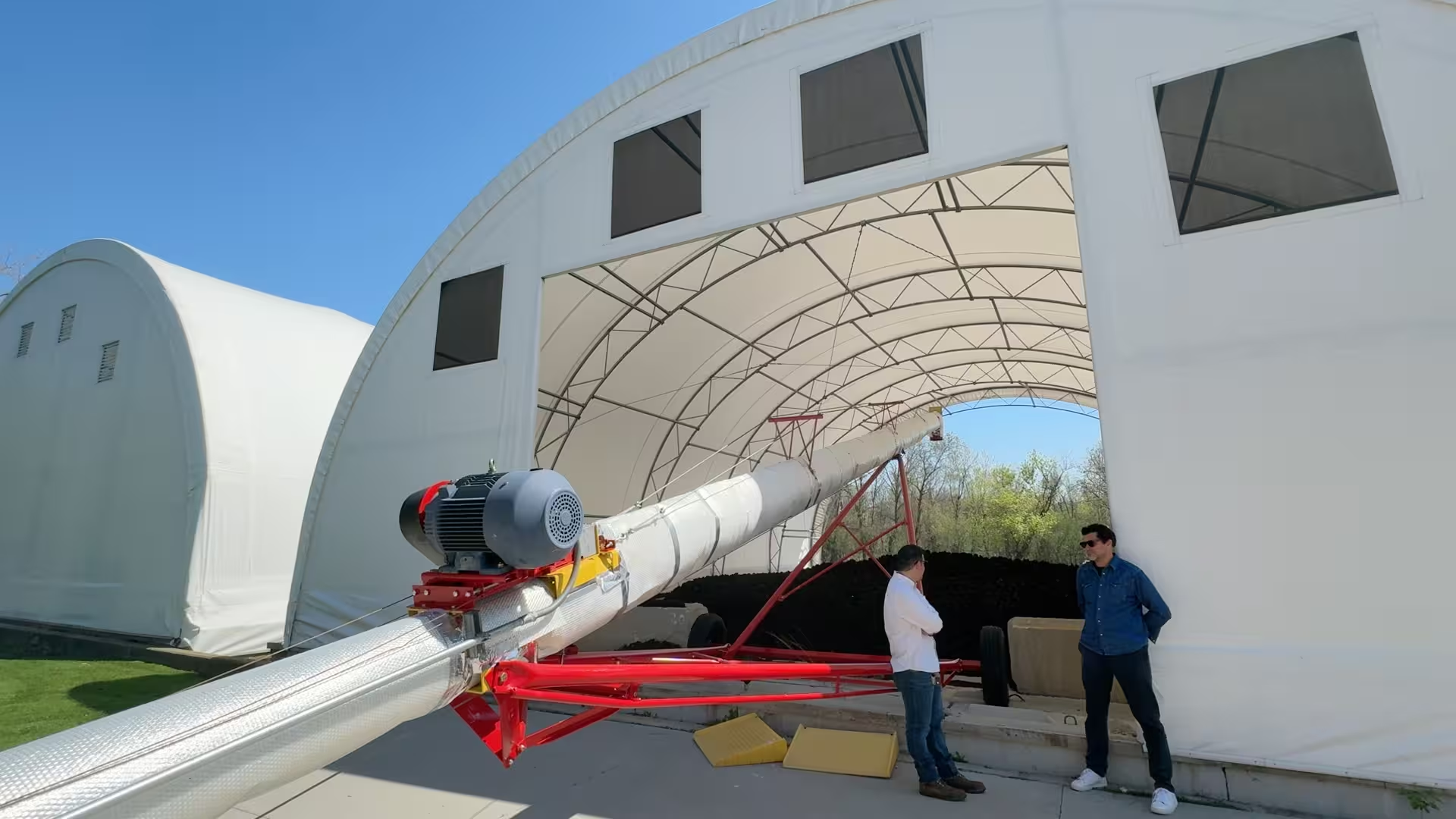
From Sludge to Strategy: Why Solids Handling Is Becoming a Critical Skill in Wastewater Treatment
Solids handling affects far more than sludge disposal. It influences plant capacity, dewatering costs, odor control, regulatory risk, agricultural reuse, and public trust. This article explores why solids treatment is becoming one of the most strategic areas of wastewater operations, and why effective training is critical for both new and experienced professionals.

California Water & Wastewater Operator Training: CEUs, CWEA Certifications, Contact Hours & Renewal
The training you need depends on the credential you hold. A California drinking water operator follows different renewal rules than a wastewater treatment operator, and a collections or maintenance professional with a CWEA certification follows another set of requirements. This guide explains California water operator training, wastewater operator training, CEUs, contact hours, educational points, certification renewal, and CWEA certifications in practical terms for operators and supervisors.
How US Water Utilities Can Solve the Workforce Crisis: 5 Strategies from ACE26
At ACE26 in Washington, D.C., I sat in on Christine Ow of Arcadis presenting "Designing the Future of Utility Workforce Development," one of the best sessions I caught all week (last-day sessions are an underrated find). Here's a summary: the sector faces interconnected pressures, from compensation and unclear career paths to an aging workforce, knowledge loss, culture challenges, and inaccessible training.

Why Regular Training Matters for Colorado Water and Wastewater Operators
For Colorado water and wastewater operators, training is more than a certification requirement. It is an essential part of maintaining technical knowledge, adapting to changing regulations, improving operational performance, and protecting public health.

After Implementing Watura for Your Team: Why the First 90 Days Matter Most
Implementing a new training program is an important investment in your workforce. Whether your goal is employee development, succession planning, regulatory compliance, or operational excellence, the first few months after launch can significantly influence long-term success. At Watura, we've worked with utilities of all sizes and have observed a common pattern: the teams that achieve the best training outcomes are the ones that establish momentum early.That's why the first 30 days after implementation are so important.Our role doesn't end when your team receives their login credentials. In fact, that's when our support truly begins.

A Practical Guide to Implementing Watura for Operator Training and Compliance
Implementing a new training platform across a utility is about more than giving employees access to online courses. It is about creating a structured, sustainable training program that supports compliance, strengthens operational knowledge, and helps employees grow throughout their careers.Whether your utility wants to simplify CEU renewal, onboard new operators, prepare staff for certification exams, or standardize training across departments, a successful rollout starts with preparation. Before implementing Watura for your team, there are a few key decisions that can make the process smoother, more organized, and far more effective in the long run.
AI in Water Utilities: A Practical Introduction for Operators and Decision-Makers
Water and wastewater professionals are facing a perfect storm. Aging infrastructure, stricter regulations, climate uncertainty, and workforce shortages are all converging at once. At the same time, utilities are generating more data than ever before, yet much of it remains underused. And then there is artificial intelligence. It is everywhere in the news, embedded in software, and increasingly present in operational tools. But for many operators and utility leaders, one question remains unanswered: What does AI actually mean for my day-to-day work? This article cuts through the noise. It explains how AI is already impacting water utilities, what key concepts you need to understand, and how you can start using it today. It also introduces a new free course, AI 101 for Water Professionals, developed by Watura in collaboration with WEF, Amazon, and the Water Center at the University of Pennsylvania.
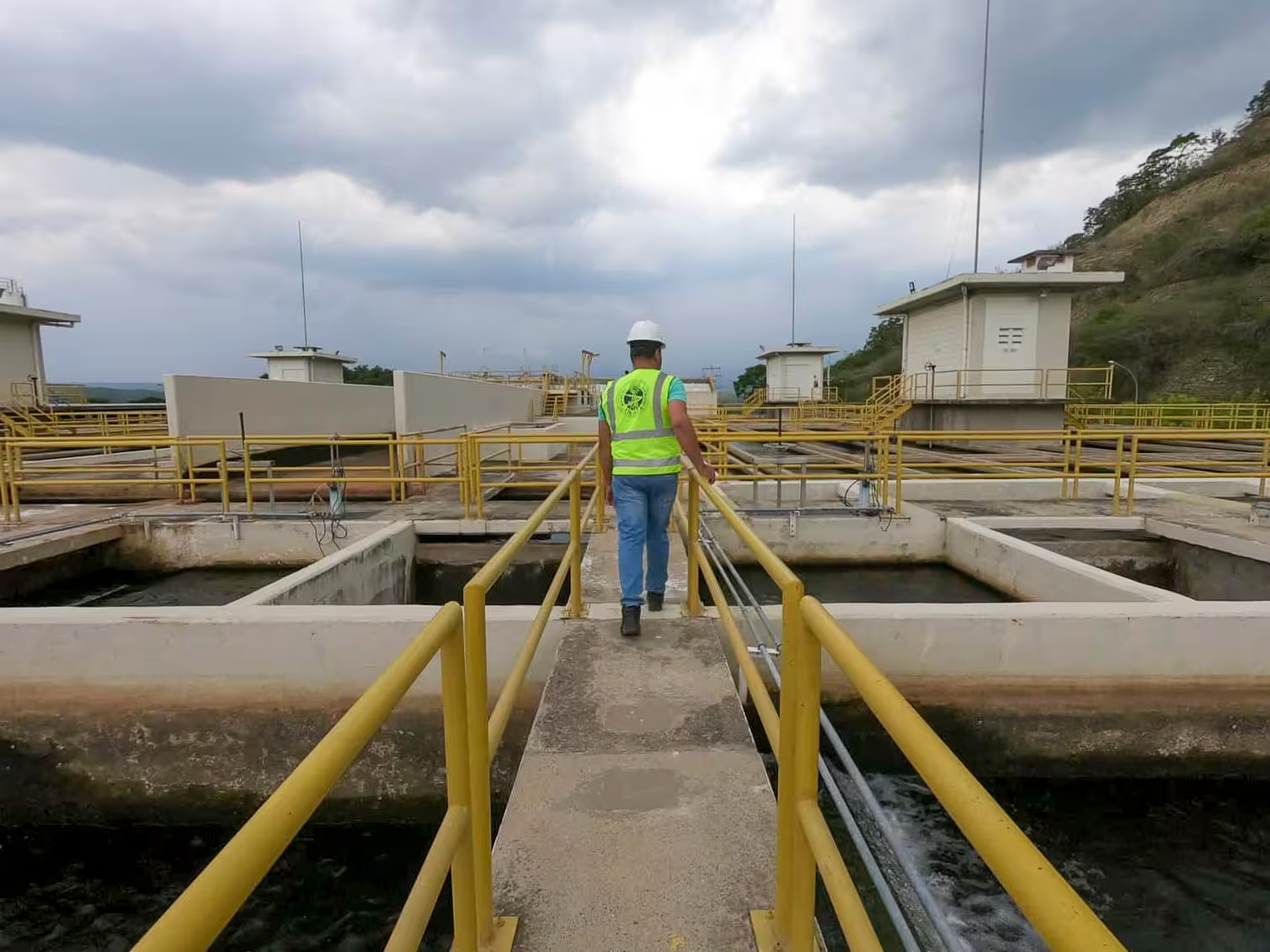
Capacity Building for Water and Wastewater Operators in the Dominican Republic
Watura, in partnership with INAPA (Instituto Nacional de Aguas Potables y Alcantarillados, National Institute of Drinking Water and Sewerage) and funded by the French Development Agency (AFD), is implementing a capacity building program in the Dominican Republic to strengthen the skills of water and wastewater operators, combining field-based training and digital learning to improve utility performance and service resilience.

The “Silver Tsunami” and the Future of Water Workforce
The water and wastewater sector faces critical workforce shortages. Watura provides flexible, expert-led training to help utilities close the gap.
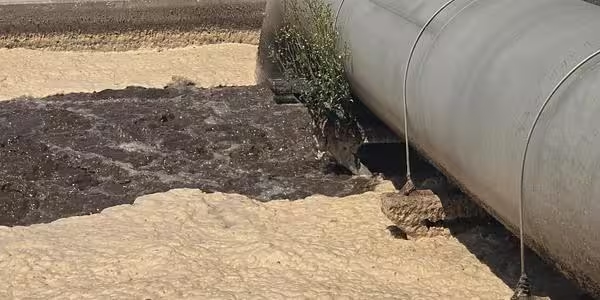
Wastewater Treatment Troubleshooting: Common Problems, Causes & Operator Checks
Effective wastewater treatment troubleshooting starts by recognizing those clues, collecting the right process data, and identifying the root cause before changing operating conditions.