From Sludge to Strategy: Why Solids Handling Is Becoming a Critical Skill in Wastewater Treatment

Solids handling affects far more than sludge disposal. It influences plant capacity, dewatering costs, odor control, regulatory risk, agricultural reuse, and public trust. This article explores why solids treatment is becoming one of the most strategic areas of wastewater operations, and why effective training is critical for both new and experienced professionals.
At a wastewater treatment plant, clean effluent gets most of the attention.
It is easy to understand why. Effluent quality is visible, closely regulated, and directly connected to the plant’s public mission. But every gallon treated also leaves something behind: solids.
Those solids must be thickened, stabilized, dewatered, stored, transported, reused, or disposed of. When any part of that process performs poorly, the effects can spread across the entire facility.
A polymer problem can increase hauling costs. Poor thickening can overload digesters. Unstable sludge can create odors and complaints. Weak dewatering can turn every truckload into an expensive shipment of water.
Beyond these internal operational pressures, the regulatory landscape is also changing, bringing new external challenges to the forefront. Today, increased attention to PFAS in biosolids is pushing solids handling into an even greater spotlight.
This does not mean wastewater operators are responsible for creating PFAS. Treatment plants receive PFAS from industrial, commercial, and residential sources. However, utilities are being asked to understand what enters their facilities, where contaminants concentrate, and how treated solids are managed.
Solids Handling is no longer the forgotten end of the treatment process. It is becoming a key part of operational resilience, environmental protection, cost control, and public communication.
Why Solids Handling Is Getting More Attention
In July 2026, the U.S. Environmental Protection Agency released draft voluntary guidance for reducing potential risks from PFOA and PFOS in sewage sludge and biosolids. The guidance is intended to help wastewater facilities, landowners, farmers, regulators, and other stakeholders evaluate possible risk-management practices.
This development reflects a larger change in the wastewater industry.
Utilities are being asked to understand more than how much sludge they produce. They also need to know:
- Where the solids come from
- How they are treated
- How stable they are
- How effectively water is removed
- What contaminants may be present
- Where the final material goes
- How operational decisions affect quality
These are not questions for managers alone. Operators, laboratory staff, maintenance teams, supervisors, and preliminary treatment personnel all contribute to the answers.
The future of solids management will depend on technology and regulations, but also on people who understand the complete solids handling process.
Biosolids Can Be a Resource: But Only After Effective Treatment
Wastewater solids are not automatically biosolids.
The EPA generally uses the term “biosolids” for sewage sludge that has been treated to meet regulatory requirements and is intended for land application as a fertilizer or soil conditioner.
When properly treated and managed, biosolids can support several beneficial uses. Agricultural land application can return nutrients and organic matter to the soil. Biosolids may also improve soil health, support water retention, sequester carbon, and reduce reliance on nonrenewable phosphorus resources.
This is the appealing side of the story: a wastewater treatment plant can become a resource recovery facility.
But resource recovery does not happen simply because a utility chooses a beneficial-use program. It begins with reliable plant operations.
Producing a consistent material requires operators to control several connected steps.
Thickening Reduces Volume
Thickening increases the concentration of solids before digestion or another downstream process.
Removing less water means smaller volumes for pumps, tanks, digesters, and hauling equipment. Effective thickening can improve process capacity and reduce the energy and chemicals required later in the treatment process.
Operators must understand percent solids, sludge characteristics, loading rates, polymer performance, and the operating principles of their thickening equipment.
Stabilization MLakes Solids More Manageable
Untreated sludge contains biodegradable organic matter that can produce odors and attract vectors.
Aerobic and anaerobic digestion are used to stabilize this material. Good digestion depends on factors such as detention time, temperature, mixing, loading, and biological activity.
When digestion becomes unstable, the consequences may include odors, foaming, lower gas production, poor dewatering, or solids that fail to meet the utility’s intended management requirements.
Dewatering Determines How Much Water Gets Hauled
Dewatering separates additional water from stabilized sludge using equipment such as centrifuges, belt filter presses, or screw presses.
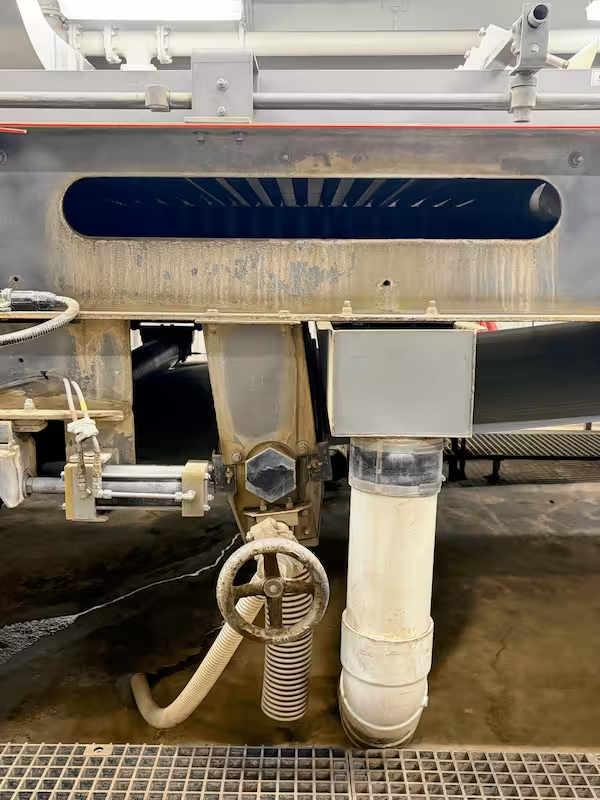
The difference between a weak and strong dewatering result can have a major financial impact.
Consider two trucks carrying the same wet weight. The truck with the lower cake solids concentration is transporting more water and less actual dry material. That means the utility may need more truck trips, more fuel, more labor, and more disposal capacity to manage the same quantity of dry solids.
For operators and supervisors, cake solids, polymer dosage, capture rate, feed consistency, and equipment condition are not abstract numbers. They are cost-control indicators.
PFAS Makes Source Awareness More Important
PFAS have been used in many industrial and consumer products. They can enter wastewater facilities through industrial discharges, commercial operations, landfill leachate, and household products.
The EPA currently recommends monitoring, identifying likely industrial sources, and using industrial pretreatment requirements where appropriate to help reduce PFAS entering wastewater systems and concentrating in biosolids.
This highlights an important point: solids hgandling does not begin at the thickener.
It begins with understanding wastewater entering the facility.
Operators may not manage industrial pretreatment programs directly, but their observations can provide valuable clues. Sudden changes in sludge volume, color, odor, settling, polymer demand, or dewatering performance may indicate a change in what is entering the plant.
A strong solids program therefore connects several teams:
- Operations staff monitor process behavior and adjusts treatment.
- Laboratory staff measure solids concentrations and other performance indicators.
- Maintenance teams keep pumps, mixers, digesters, presses, and polymer systems reliable.
- Pretreatment personnel investigate significant industrial or commercial sources.
- Supervisors and managers evaluate risk, costs, regulations, and long-term management options.
Solids management works best when these groups share information rather than treating each process as a separate department.
The Operator’s Role Is Becoming More Strategic
For years, operators may have learned solids processes mainly as a collection of equipment: thickeners, digesters, centrifuges, presses, conveyors, pumps, and storage tanks.
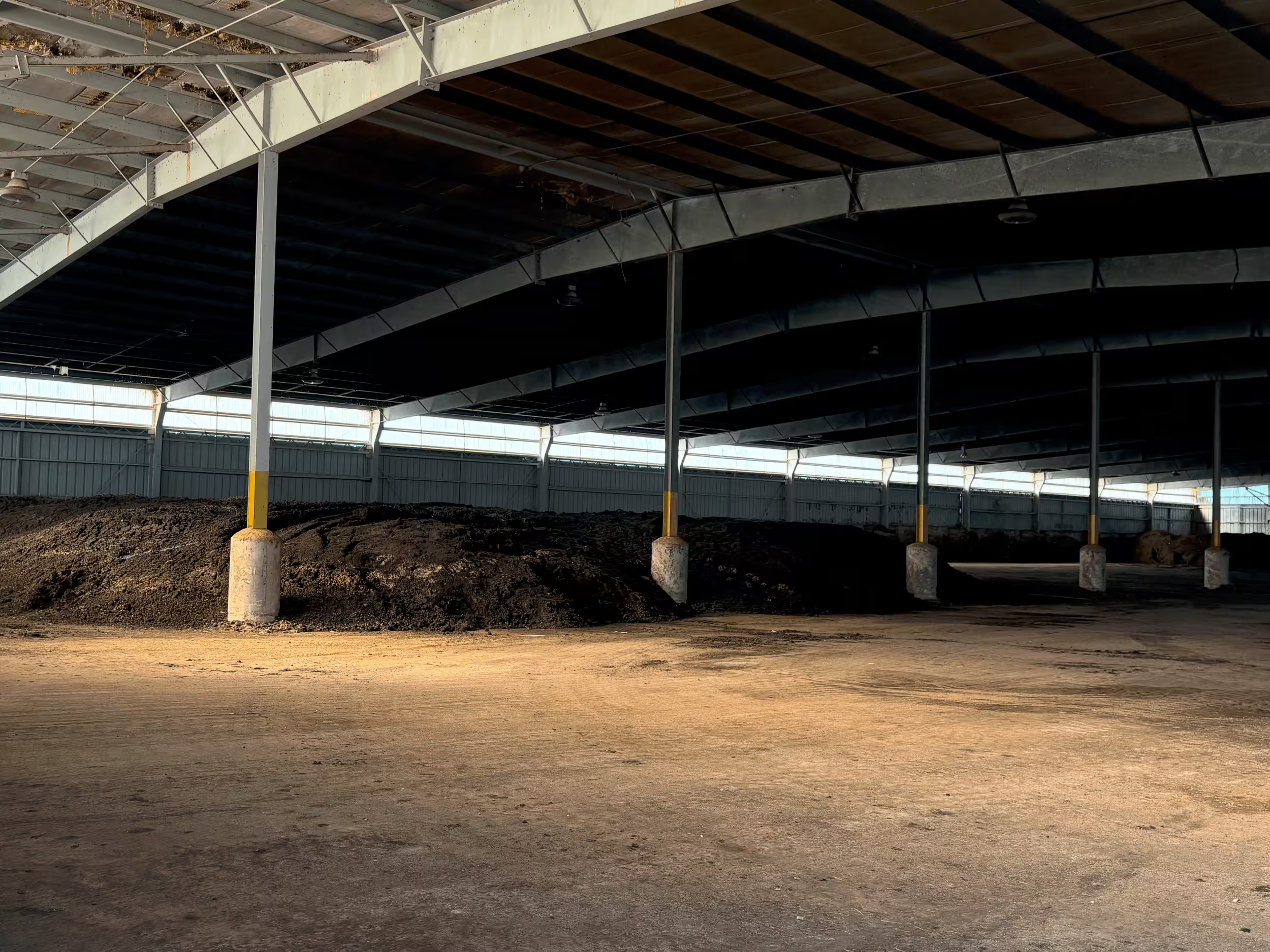
Equipment knowledge is still essential. But operators also need to understand how the pieces affect one another.
For example:
- A change in waste activated sludge concentration may affect thickener loading.
- Thickener performance may change digester detention time.
- Digester stability may influence dewatering.
- Dewatering performance may affect hauling frequency.
- Storage conditions may influence odors and public complaints.
- Final solids quality may determine which reuse or disposal options remain available.
This systems-level understanding is especially important for wastewater supervisors and superintendents. A low-cost decision in one area can create a high-cost problem somewhere else.
The most valuable operators are not simply the people who know which button to push. They understand what should happen before and after that button is pushed.
Solids Handling Is Also a Workforce Development Opportunity
For someone considering a career in the wastewater industry, solids hgandling may not sound like the most glamorous specialty.
That perception deserves to change.
Solids operations combine biology, chemistry, mechanical systems, laboratory analysis, process control, safety, environmental stewardship, and logistics.
A solids operator may work with:
- Biological digestion processes
- Pumps, conveyors, mixers, and centrifuges
- Polymer preparation and dosing
- Laboratory and field measurements
- Odor prevention
- Gas and confined-space hazards
- Truck loading and material storage
- Agricultural reuse or disposal programs
- Troubleshooting and process optimization
For operators, stronger solids knowledge can support advancement into lead operator, supervisor, superintendent, or utility management positions.
Solids handling is not a dead end. It is one of the best places to learn how an entire treatment plant functions as a connected system.
What Effective Solids Handling Training Should Teach
Good training should go beyond identifying equipment from a diagram.
Operators need to understand why each process exists, how to recognize normal operation, what measurements matter, and what warning signs require action.
Effective Solids Handling training should help learners answer practical questions such as:
- What does percent solids reveal about sludge condition?
- Why does polymer demand change?
- How does poor thickening affect digestion?
- What operating conditions support stable digestion?
- How can operators judge dewatering performance?
- What visual signs suggest a developing problem?
- How can solids handling problems affect liquid treatment?
- What safety risks exist during storage, transport, and loadout?
- What information should be documented before solids leave the plant?
This knowledge helps operators troubleshoot earlier instead of waiting for a failed process, odor event, equipment shutdown, or rejected load.
It also gives supervisors a shared technical language for coaching employees and evaluating performance.
Five Questions Every Utility Should Ask About Its Solids Program
A strong solids program begins with clear operational questions.
1. Do we know our actual solids inventory?
Utilities should be able to track the amount of solids produced, wasted, thickened, stabilized, dewatered, stored, and removed.
Unexpected differences may reveal measurement problems, process losses, equipment issues, or incorrect assumptions.
2. Are we hauling solids, or hauling water?
Cake solids concentration should be connected to hauling and disposal data.
A small improvement in dewatering can reduce the number of loads required over a year. Operators should understand how their daily adjustments affect this higher cost.
3. Are process changes being communicated?
Liquid treatment and solids treatment affect each other.
Changes in wasting, influent loading, chemical addition, or biological conditions should be communicated before downstream operators discover the effects through an upset.
4. Are we prepared to explain our solids program?
PFAS and biosolids are receiving greater public and regulatory attention. Utilities should be prepared to explain how solids are treated, tested, stored, transported, and managed.
Clear records and knowledgeable employees build trust.
5. Does our staff understand the complete treatment chain?
An employee who only understands one machine may struggle when conditions change.
Cross-training helps operators recognize how thickening, digestion, dewatering, storage, reuse, and disposal work together.
The Future of Wastewater Runs Through the Solids Stream
The liquids side of a wastewater plant will always be critical. But some of the industry’s future challenges will also be decided on the solids side.
Utilities must balance agricultural reuse, disposal capacity, emerging contaminants, energy use, greenhouse gas reduction, odor control, public expectations, and operating costs.
Technology may change. Regulations may change. Operators who understand solids properties, treatment processes, equipment, safety, and troubleshooting will be better prepared for all of them.
That is what makes solids handling one of the most forward-looking areas in wastewater operations.
See it in Action: The Importance of Solids Handling
Want to see how these concepts apply to daily operations? Watch this short video introducing our solids handling course and why it is essential to facility performance.
If you found this overview helpful, you can explore our complete training curriculum on our training platform.
Build a Stronger Foundation in Solids Handling
Watura’s two-part Solids Handling training course is designed to help wastewater professionals understand the full solids treatment process.
Solids Handling – Part 1 covers the types and properties of wastewater solids, percent solids, field and laboratory measurements, polymer systems, and sludge thickening.
Solids Handling – Part 2 continues with aerobic and anaerobic digestion, dewatering, safety, storage, transport, reuse, disposal, and common troubleshooting situations.
Together, the two courses help operators connect everyday process measurements with plant performance, safety, costs, and final solids management.
Explore our Solids Handling training course and strengthen the skills needed for the next generation of wastewater operations.
Frequently Asked Questions
- What is solids handling in wastewater treatment?
- Solids handling includes the processes used to collect, thicken, stabilize, dewater, store, transport, reuse, or dispose of solids produced during wastewater treatment.
- Why is solids handling important?
- Effective solids handling reduces sludge volume, controls odors, improves stability, supports safe management, and can lower energy, hauling, and disposal costs. Poor solids handling can also affect liquid treatment processes.
- Can treated wastewater solids be used in agriculture?
- Biosolids that meet applicable treatment and regulatory requirements may be land-applied as a soil conditioner or fertilizer. Requirements vary based on biosolids classification and federal, state, tribal, and local regulations.
- Why should wastewater operators receive solids handling training?
- Training helps operators understand solids characteristics, process measurements, equipment, digestion, dewatering, safety, troubleshooting, and how solids operations affect the rest of the wastewater treatment plant.
- Is solids handling a good career specialty?
- Yes. Solids handling involves biological treatment, mechanical equipment, laboratory measurements, safety, logistics, environmental compliance, and resource recovery. These skills can support advancement into senior operations and utility management roles.
From Sludge to Strategy: Why Solids Handling Is Becoming a Critical Skill in Wastewater Treatment
Solids handling affects far more than sludge disposal. It influences plant capacity, dewatering costs, odor control, regulatory risk, agricultural reuse, and public trust. This article explores why solids treatment is becoming one of the most strategic areas of wastewater operations, and why effective training is critical for both new and experienced professionals.
California Water & Wastewater Operator Training: CEUs, CWEA Certifications, Contact Hours & Renewal
The training you need depends on the credential you hold. A California drinking water operator follows different renewal rules than a wastewater treatment operator, and a collections or maintenance professional with a CWEA certification follows another set of requirements. This guide explains California water operator training, wastewater operator training, CEUs, contact hours, educational points, certification renewal, and CWEA certifications in practical terms for operators and supervisors.
.avif)

How US Water Utilities Can Solve the Workforce Crisis: 5 Strategies from ACE26
At ACE26 in Washington, D.C., I sat in on Christine Ow of Arcadis presenting "Designing the Future of Utility Workforce Development," one of the best sessions I caught all week (last-day sessions are an underrated find). Here's a summary: the sector faces interconnected pressures, from compensation and unclear career paths to an aging workforce, knowledge loss, culture challenges, and inaccessible training.


Why Regular Training Matters for Colorado Water and Wastewater Operators
For Colorado water and wastewater operators, training is more than a certification requirement. It is an essential part of maintaining technical knowledge, adapting to changing regulations, improving operational performance, and protecting public health.

After Implementing Watura for Your Team: Why the First 90 Days Matter Most
Implementing a new training program is an important investment in your workforce. Whether your goal is employee development, succession planning, regulatory compliance, or operational excellence, the first few months after launch can significantly influence long-term success. At Watura, we've worked with utilities of all sizes and have observed a common pattern: the teams that achieve the best training outcomes are the ones that establish momentum early.That's why the first 30 days after implementation are so important.Our role doesn't end when your team receives their login credentials. In fact, that's when our support truly begins.

A Practical Guide to Implementing Watura for Operator Training and Compliance
Implementing a new training platform across a utility is about more than giving employees access to online courses. It is about creating a structured, sustainable training program that supports compliance, strengthens operational knowledge, and helps employees grow throughout their careers.Whether your utility wants to simplify CEU renewal, onboard new operators, prepare staff for certification exams, or standardize training across departments, a successful rollout starts with preparation. Before implementing Watura for your team, there are a few key decisions that can make the process smoother, more organized, and far more effective in the long run.
AI in Water Utilities: A Practical Introduction for Operators and Decision-Makers
Water and wastewater professionals are facing a perfect storm. Aging infrastructure, stricter regulations, climate uncertainty, and workforce shortages are all converging at once. At the same time, utilities are generating more data than ever before, yet much of it remains underused. And then there is artificial intelligence. It is everywhere in the news, embedded in software, and increasingly present in operational tools. But for many operators and utility leaders, one question remains unanswered: What does AI actually mean for my day-to-day work? This article cuts through the noise. It explains how AI is already impacting water utilities, what key concepts you need to understand, and how you can start using it today. It also introduces a new free course, AI 101 for Water Professionals, developed by Watura in collaboration with WEF, Amazon, and the Water Center at the University of Pennsylvania.

Why Tracking CEUs is Critical for Water and Wastewater Operators
This article explains why CEU tracking is essential for water and wastewater operators to maintain valid licenses, meet regulatory requirements, and avoid compliance risks, while introducing Watura’s free CEU Tracker for managing and documenting CEUs in one centralized system.