A Practical Guide to Implementing Watura for Operator Training and Compliance

Implementing a new training platform across a utility is about more than giving employees access to online courses. It is about creating a structured, sustainable training program that supports compliance, strengthens operational knowledge, and helps employees grow throughout their careers.Whether your utility wants to simplify CEU renewal, onboard new operators, prepare staff for certification exams, or standardize training across departments, a successful rollout starts with preparation. Before implementing Watura for your team, there are a few key decisions that can make the process smoother, more organized, and far more effective in the long run.
Who Can Benefit From Watura?
Many utilities initially think of online training as something designed only for licensed operators. In practice, nearly every department within a water or wastewater utility can benefit from having access to industry training.
Operators
Operators remain the primary users of the platform, including professionals working in:
- Water treatment
- Water distribution
- Wastewater treatment
- Wastewater collection
For licensed operators, online training simplifies CEU gathering and license renewal while reducing travel time and scheduling challenges.
Beyond compliance, operators can strengthen their technical knowledge in areas such as treatment processes, safety, maintenance, pumps and motors, distribution systems, and collection systems.
For experienced staff, training helps maintain technical expertise. For newer operators, it provides a strong operational foundation.
OITs and Entry-Level Employees
Operators-in-training (OITs) and entry-level staff often need structured onboarding more than anything else.
Instead of relying entirely on shadowing or scattered training materials, utilities can create guided learning paths that introduce:
- Industry fundamentals
- Basic safety procedures
- Industry terminology
- Treatment basics
- Regulatory concepts
- Operational best practices
A structured approach helps new employees gain confidence faster while reducing the training charge of senior operators and supervisors. It also ensures consistency. Every employee starts with the same foundational knowledge, regardless of shift schedules or staffing limitations.
Supervisors and Managers
Supervisors are responsible not only for operations, but also for workforce development and compliance oversight.
Using Watura, supervisors and managers can:
- Monitor employee training progress
- Recommend courses
- Track completed training
- Identify knowledge gaps
- Support succession planning
- Verify compliance requirements
For many utilities, centralized visibility becomes one of the platform’s biggest advantages. Instead of managing spreadsheets, paper records, or disconnected certificates, supervisors gain a clearer picture of team progress across facilities and departments.
Maintenance, Laboratory, and Support Staff
Training is not limited to operators alone.
Maintenance technicians, electricians, mechanics, instrumentation staff, and laboratory personnel all work closely with operational systems. A stronger understanding of utility operations improves communication and collaboration across departments.
For example:
- Maintenance staff benefit from understanding treatment process fundamentals.
- Laboratory employees gain operational context for sampling and testing.
- Support personnel better understand how their work affects plant operations.
Cross-functional knowledge often leads to faster troubleshooting, stronger teamwork, and improved operational efficiency.
HR, Training Managers, and Administrative Staff
HR teams and training coordinators often play a central role in workforce development and compliance tracking.
For these users, Watura becomes more than a training library. It becomes a workforce management tool.
Utilities can use the platform to:
- Standardize onboarding
- Organize training by department
- Track employee training completion
- Verify training compliance
- Support career progression
- Simplify recordkeeping
Even customer service and administrative employees can benefit from introductory industry training. A better understanding of water and wastewater operations improves communication with customers, operators, and the public.

Define User Roles Before Launching
Before importing users or assigning courses, take time to define how different employees will use the platform. Not every employee needs the same permissions, assignments, or learning objectives. Establishing roles early creates a cleaner, more organized rollout.
Most utilities typically identify several categories of users.
Employees Renewing Licenses
These users primarily need:
- State-approved CEU courses
- Renewal tracking
- Compliance documentation
- Access to required training hours
For licensed operators, simplicity matters. Employees should immediately understand which courses apply to their certification and how to complete renewal requirements.
Employees Preparing for Certification Exams
Some employees are focused on advancement rather than renewal.
These users may be:
- Preparing for operator certification exams
- Transitioning into a new operational role
- Working toward higher license grades
- Building technical knowledge for future responsibilities
For these employees, structured learning paths and exam preparation tools are often more effective than isolated courses.
New Professionals Entering the Industry
New hires, interns, and administrative employees may simply need a broad understanding of the industry.
Introductory training can help them understand:
- How utilities operate
- Basic treatment concepts
- Industry terminology
- Regulatory responsibilities
- Safety expectations
This foundational knowledge helps employees integrate more quickly into the organization.
Supervisors and Administrators
Supervisors and administrators usually need broader visibility across teams.
Their responsibilities often include:
- Monitoring progress
- Assigning training
- Managing users and groups
- Reviewing compliance
- Supporting employee development
Clearly defining administrative responsibilities from the beginning prevents confusion later.
Organize Your Team Using Groups
Setting up groups properly is one of the most important parts of implementation.
Groups make it easier to assign training, manage reporting, and monitor progress without handling every employee individually.
Most utilities organize groups based on operational structure, including:
- Facility or plant
- Department or team
- Supervisor or manager
- License grade or certification level
For example, an operator could belong to multiple groups simultaneously:
- Wastewater Treatment Plant
- Night Shift
- Class C Operators
- Collections Team
This flexibility allows utilities to organize training logically while maintaining clear oversight.
A practical best practice is to keep one primary manager responsible for each group, even if employees belong to several groups.
Assign Courses Strategically
One of the most common implementation mistakes is assigning too much training immediately. When employees log in and see a long list of required courses, engagement often drops quickly.
A phased approach usually works much better.
Start Small
Begin with one or two relevant courses that employees can complete early.
This helps users:
- Learn the platform
- Build confidence
- Create momentum
- Become comfortable with online training
Once employees are engaged, additional courses and learning paths can be assigned gradually.
Create Learning Paths for Entry-Level Staff
For OITs and newer employees, structured learning paths are often more effective than assigning 10–15 unrelated courses at once.
A strong onboarding path might include:
- Industry fundamentals
- Safety basics
- Treatment process overview
- Distribution or collection fundamentals
- Regulatory concepts
This approach feels more organized, manageable, and purposeful for new professionals entering the industry.
Align Training With Operational Priorities
Training should directly support operational responsibilities.
For example:
- Collection system crews may focus on confined space safety and sewer system operations.
- Distribution operators may need hydrant, valve, and leak detection training.
- Supervisors may benefit from compliance and leadership content.
When training feels relevant to daily work, participation and completion rates improve significantly.
Prepare Your User Import Carefully
Before launch, utilities typically complete a user import template containing employee and organizational information.
Although this step may seem administrative, it plays a major role in long-term organization and reporting accuracy.
The import template may include:
- Employee names and email addresses
- Departments and facilities
- Supervisors and managers
- License grades
- Group assignments
- User roles
Taking time to organize this information correctly upfront prevents cleanup later and ensures reporting functions properly from day one.
Coordinate With Your IT Department Early
Even simple implementations benefit from early IT coordination.
Before rollout, utilities should notify their IT department about the platform so they can:
- Whitelist required domains
- Ensure email delivery
- Verify network accessibility
- Review browser compatibility
- Address security requirements
Handling these technical details before launch prevents avoidable login issues and employee frustration.
The Watura team can also work directly with your IT department to simplify the process.
Schedule Orientation and Admin Enablement
Successful implementations do not end with account creation. Employees, supervisors, and administrators all need to understand how the platform works and how training will be managed moving forward.
Most successful rollouts include:
- Employee orientation sessions
- Administrative training
- Manager enablement
- Q&A sessions
These meetings help teams understand:
- How to access courses
- How assignments work
- How progress is tracked
- How reporting functions
- How compliance records are managed
Once this foundation is established, ongoing administration becomes much easier.
Final Thoughts
A successful training rollout starts with organization and planning.
Before implementing Watura, utilities should take time to:
- Define employee roles
- Organize groups strategically
- Assign training thoughtfully
- Prepare user information carefully
- Coordinate with IT early
- Schedule onboarding and enablement sessions
When these steps are handled properly, the implementation becomes smoother for everyone involved — from operators and supervisors to HR teams and utility managers. More importantly, employees are far more likely to engage with training when the system feels organized, relevant, and aligned with their daily responsibilities.
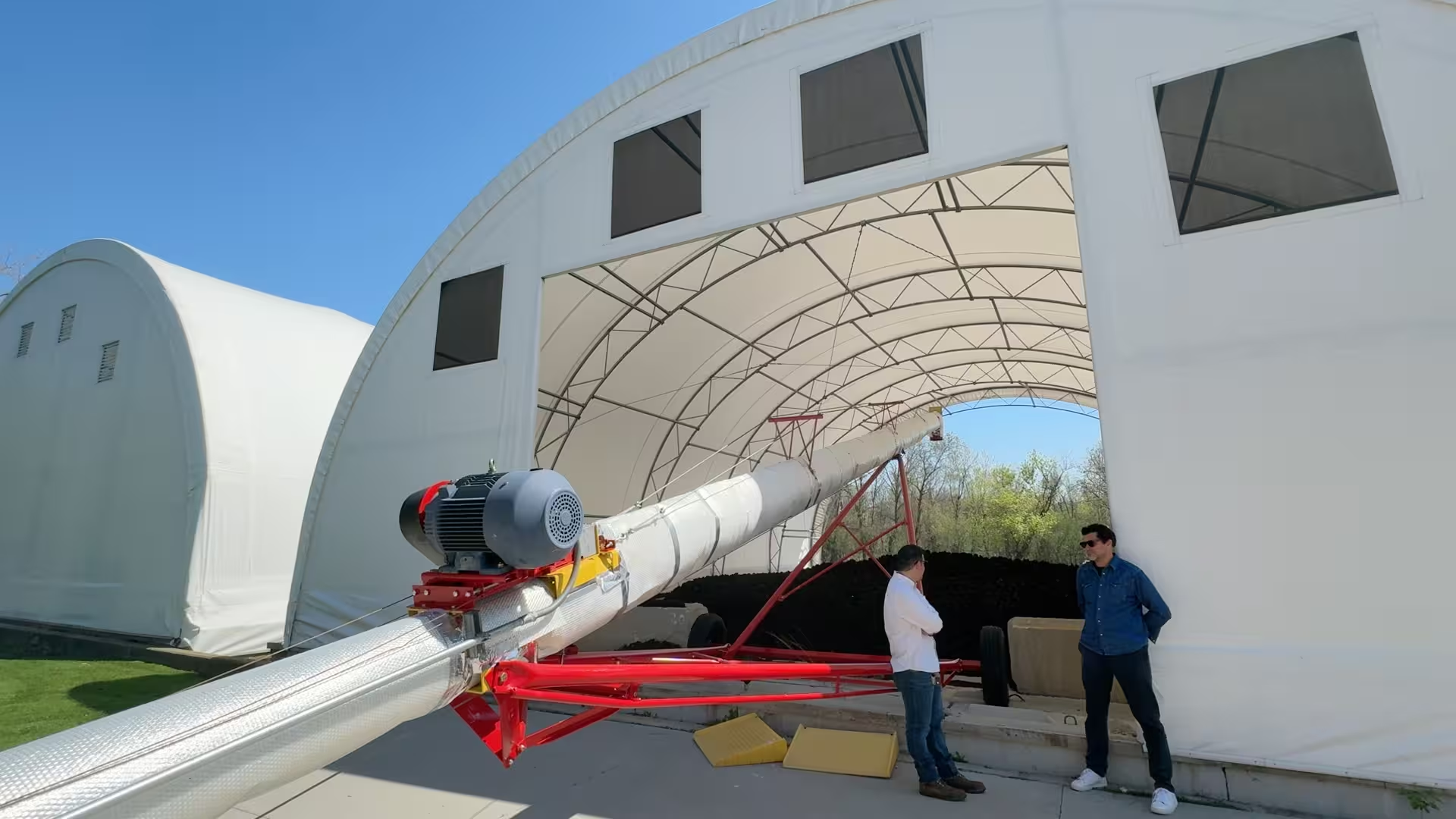
From Sludge to Strategy: Why Solids Handling Is Becoming a Critical Skill in Wastewater Treatment
Solids handling affects far more than sludge disposal. It influences plant capacity, dewatering costs, odor control, regulatory risk, agricultural reuse, and public trust. This article explores why solids treatment is becoming one of the most strategic areas of wastewater operations, and why effective training is critical for both new and experienced professionals.

California Water & Wastewater Operator Training: CEUs, CWEA Certifications, Contact Hours & Renewal
The training you need depends on the credential you hold. A California drinking water operator follows different renewal rules than a wastewater treatment operator, and a collections or maintenance professional with a CWEA certification follows another set of requirements. This guide explains California water operator training, wastewater operator training, CEUs, contact hours, educational points, certification renewal, and CWEA certifications in practical terms for operators and supervisors.
.avif)

How US Water Utilities Can Solve the Workforce Crisis: 5 Strategies from ACE26
At ACE26 in Washington, D.C., I sat in on Christine Ow of Arcadis presenting "Designing the Future of Utility Workforce Development," one of the best sessions I caught all week (last-day sessions are an underrated find). Here's a summary: the sector faces interconnected pressures, from compensation and unclear career paths to an aging workforce, knowledge loss, culture challenges, and inaccessible training.

Why Regular Training Matters for Colorado Water and Wastewater Operators
For Colorado water and wastewater operators, training is more than a certification requirement. It is an essential part of maintaining technical knowledge, adapting to changing regulations, improving operational performance, and protecting public health.

After Implementing Watura for Your Team: Why the First 90 Days Matter Most
Implementing a new training program is an important investment in your workforce. Whether your goal is employee development, succession planning, regulatory compliance, or operational excellence, the first few months after launch can significantly influence long-term success. At Watura, we've worked with utilities of all sizes and have observed a common pattern: the teams that achieve the best training outcomes are the ones that establish momentum early.That's why the first 30 days after implementation are so important.Our role doesn't end when your team receives their login credentials. In fact, that's when our support truly begins.
A Practical Guide to Implementing Watura for Operator Training and Compliance
Implementing a new training platform across a utility is about more than giving employees access to online courses. It is about creating a structured, sustainable training program that supports compliance, strengthens operational knowledge, and helps employees grow throughout their careers.Whether your utility wants to simplify CEU renewal, onboard new operators, prepare staff for certification exams, or standardize training across departments, a successful rollout starts with preparation. Before implementing Watura for your team, there are a few key decisions that can make the process smoother, more organized, and far more effective in the long run.
AI in Water Utilities: A Practical Introduction for Operators and Decision-Makers
Water and wastewater professionals are facing a perfect storm. Aging infrastructure, stricter regulations, climate uncertainty, and workforce shortages are all converging at once. At the same time, utilities are generating more data than ever before, yet much of it remains underused. And then there is artificial intelligence. It is everywhere in the news, embedded in software, and increasingly present in operational tools. But for many operators and utility leaders, one question remains unanswered: What does AI actually mean for my day-to-day work? This article cuts through the noise. It explains how AI is already impacting water utilities, what key concepts you need to understand, and how you can start using it today. It also introduces a new free course, AI 101 for Water Professionals, developed by Watura in collaboration with WEF, Amazon, and the Water Center at the University of Pennsylvania.