Wastewater Treatment Troubleshooting: Common Problems, Causes & Operator Checks

Effective wastewater treatment troubleshooting starts by recognizing those clues, collecting the right process data, and identifying the root cause before changing operating conditions.
This guide covers common wastewater treatment plant problems, including hydraulic overload, shock loads, filamentous bacteria, foaming, bulking sludge, high effluent TSS, low dissolved oxygen, loss of nitrification, and pump failures. It also explains what operators should check before deciding on corrective action.
Key takeaway: Good troubleshooting is not about making the fastest adjustment. It is about identifying where the problem started, understanding what changed, and using operating data to address the cause rather than only the symptom.
A Systematic Approach to Wastewater Treatment Troubleshooting
When effluent quality begins to deteriorate, changing several operating parameters at once can make troubleshooting more difficult. If multiple variables are changed simultaneously, it becomes harder to determine which adjustment actually improved or worsened performance.
A more reliable troubleshooting process follows a sequence:
- Define the problem. What exactly changed?
- Determine when it started.
- Identify which part of the treatment process is affected.
- Review recent operating data and trends.
- Identify anything that changed before the problem appeared.
- List the most likely causes.
- Perform targeted observations, sampling, or testing.
- Make an appropriate operational adjustment.
- Monitor the response and document what happened.
The U.S. EPA's activated sludge troubleshooting guidance emphasizes identifying where a problem is occurring before changing operating conditions. For example, when troubleshooting elevated ammonia, comparing ammonia concentrations at different points in the process can help distinguish an aeration-basin issue from a secondary-clarifier issue. You can check the EPA Activated Sludge Process Control and Troubleshooting Manual.
Look at Trends, Not Just One Reading
A single measurement provides a snapshot. Troubleshooting usually requires understanding what has changed over hours, days, or weeks.
Depending on the process and the problem, useful data may include:
- Influent and effluent flow
- BOD or COD
- TSS
- Ammonia
- Nitrate
- pH
- Alkalinity
- Dissolved oxygen
- MLSS and MLVSS
- Sludge Volume Index (SVI)
- Sludge blanket depth
- Return activated sludge (RAS) flow
- Waste activated sludge (WAS) flow
- Solids retention time or sludge age
- Temperature
- Blower output
- Pump run time
- Rainfall or wet-weather conditions
The most useful parameters will depend on your plant configuration and the problem being investigated.
Know What “Normal” Looks Like at Your Plant
Generic operating ranges can be useful references, but successful wastewater treatment troubleshooting also depends on knowing your own facility.
Two activated sludge plants can operate effectively at different MLSS concentrations, RAS rates, sludge ages, or DO setpoints because of differences in influent characteristics, loading, configuration, equipment, temperature, and treatment objectives.
Operators should therefore compare current conditions with:
- Historical plant performance
- Design criteria
- Standard operating procedures
- Permit requirements
- Manufacturer recommendations
- Established plant-specific operating ranges
This makes abnormal conditions easier to recognize.
Want to practice a structured troubleshooting methodology? Watura's online Troubleshooting in a Wastewater Treatment Plant course uses real operating problems and decision trees to help wastewater operators identify root causes and select appropriate corrective actions. Explore our wastewater troubleshooting course.
1. Hydraulic Overload at a Wastewater Treatment Plant
What Is Hydraulic Overload?
Hydraulic overload occurs when flow through a wastewater treatment plant or individual treatment unit exceeds the flow that the system can effectively handle.
Wet weather is a frequent cause. Rainwater and groundwater entering sanitary sewer systems through inflow and infiltration (I/I) can substantially increase influent flow.
The EPA notes that peak wet-weather flows can exceed the capacity of treatment units and create operational problems in biological treatment systems. Activated sludge processes can be particularly vulnerable because large flow increases can shift solids from aeration basins into secondary clarifiers and contribute to solids loss. Check the EPA guidance on peak flows at sewage treatment plants.
Signs of Hydraulic Overload
Operators may observe:
- Rapid increases in influent flow
- Increasing clarifier surface loading
- Rising sludge blankets
- Solids carryover from secondary clarifiers
- Higher effluent TSS
- Reduced treatment contact time
- Changes in RAS concentration
- Process deterioration following rainfall
Compare the timing of treatment problems with influent flow and rainfall data.
What Should Operators Check?
Start with:
- Current flow versus normal dry-weather flow
- Peak flow compared with plant or unit design capacity
- Rainfall history
- I/I patterns
- Secondary clarifier sludge blanket depth
- Effluent TSS
- RAS and WAS operation
- Whether solids inventory is shifting toward the clarifiers
EPA technical guidance identifies excessive hydraulic loading of secondary clarifiers as a potential cause of biological-solids carryover and poor effluent quality.
Troubleshooting Principle
Do not assume that every wet-weather effluent problem is biological.
First determine whether increased hydraulic loading is reducing solids separation or moving biomass through the system faster than normal.
2. Shock Loads in Wastewater Treatment
A wastewater treatment plant is designed to handle variation, but sudden changes in wastewater characteristics can disrupt biological treatment.
These events are commonly described as shock loads.
Organic Shock Loads
An organic shock load occurs when the biological process receives a substantial increase in biodegradable material over a relatively short period.
The resulting increase in oxygen demand can contribute to declining DO if the aeration system cannot keep up with demand.
Operators may observe:
- Falling dissolved oxygen
- Changing oxygen demand
- Changes in biological activity
- Increased loading relative to biomass
- Deteriorating effluent quality
Toxic or Inhibitory Shock Loads
Certain industrial discharges, chemicals, extreme pH conditions, or other inhibitory materials can interfere with the microorganisms responsible for biological treatment.
Possible indicators include:
- Sudden biological-process deterioration
- Unexpected ammonia breakthrough
- Changes in oxygen uptake
- Abnormal pH
- Reduced biological activity
- Unusual influent color or odor
- Changes observed during microscopic examination
EPA process-control guidance identifies toxic shock loading as one potential cause of poor secondary effluent and recommends evaluating biological activity and process conditions when investigating the problem. Check the EPA Process Control Manual for Aerobic Biological Wastewater Treatment Facilities.
What Should Operators Check?
Compare conditions immediately before and after the upset:
- Influent flow
- Organic loading
- pH
- Conductivity, if monitored
- DO
- Ammonia
- Industrial discharge information
- Septage or hauled-waste receiving records
- Microscopic observations
- Recent plant operational changes
The objective is to identify what changed and when.
3. Filamentous Bacteria in Activated Sludge
Filamentous microorganisms naturally occur in activated sludge. Problems arise when certain filamentous organisms become excessive and interfere with normal settling or contribute to stable foam.
Activated sludge needs to form flocs that settle effectively in the secondary clarifier.
When excessive filamentous growth extends through and between flocs, the sludge may become less compact and settle poorly. This can contribute to sludge bulking, higher sludge volume, lower return-sludge concentration, and solids loss.
EPA guidance describes excessive filamentous growth as an important cause of activated sludge bulking. Check the EPA report on activated sludge bulking and foaming.
What Can Encourage Filamentous Growth?
There is no single cause.
Different filamentous organisms can be favored by different environmental conditions. Troubleshooting therefore requires identifying process conditions rather than treating “filaments” as one problem.
Depending on the facility, investigation may include:
- Dissolved oxygen
- Organic loading
- Nutrient availability
- Septicity
- pH
- Sludge age
- Influent wastewater characteristics
- Fats, oils, and grease
- Microscopic examination
Don't Diagnose Filamentous Problems by Appearance Alone
Microscopic examination can provide valuable information because different organisms may indicate different process conditions.
An operator should combine microscopy with process data rather than selecting a corrective action based only on the presence of filaments.
For a deeper technical reference, the Water Environment Federation's Activated Sludge and Nutrient Removal manual covers activated sludge microbiology, secondary clarification, process control, testing, and troubleshooting.
4. Foaming in Aeration Tanks
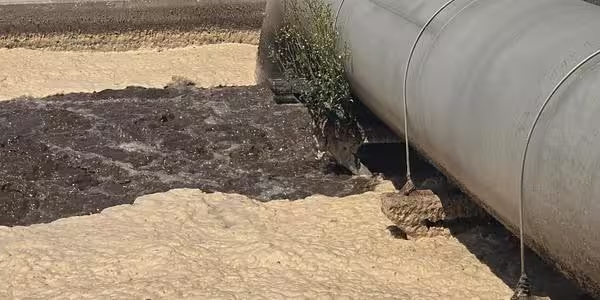
Foam is one of the most visible wastewater treatment problems, but not all foam has the same cause.
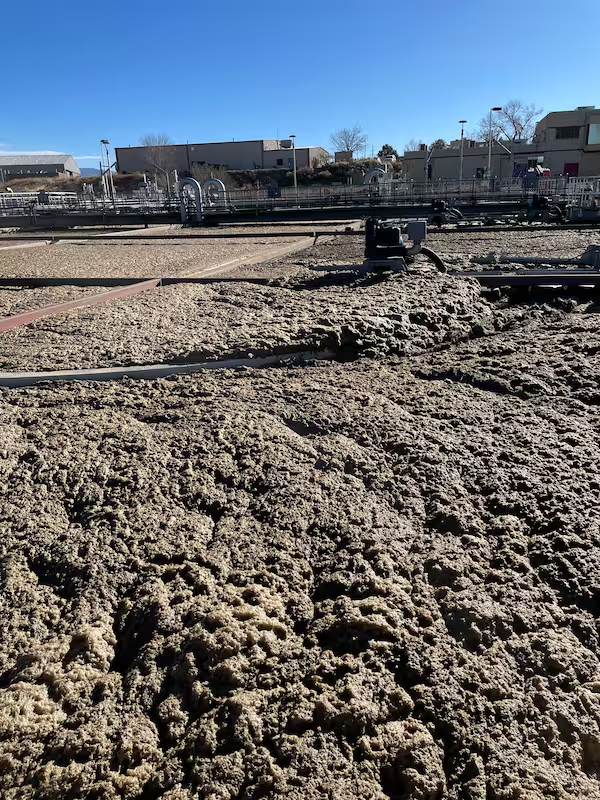
The color, stability, thickness, location, and timing of foam can all provide useful troubleshooting clues.
What Should Operators Observe?
Record:
- Foam color
- Foam thickness
- Whether it is stable or quickly collapses
- Where it occurs
- When it first appeared
- Whether conditions recently changed
- Sludge age
- Influent characteristics
- FOG loading
- Microscopic observations
Some foam can occur during startup or changing biological conditions. Persistent foam may be associated with process conditions that favor particular microorganisms or with wastewater characteristics such as elevated fats, oils, and grease.
The EPA distinguishes between temporary startup foam and more persistent biological foaming problems in activated sludge systems. Check the EPA guidance on activated sludge bulking and foaming.
Avoid Treating the Foam Before Identifying the Cause
Physically removing foam may control an immediate operational problem, but it does not necessarily correct the underlying process condition.
Ask:
What changed in the biology or influent that allowed the foam to develop?
That question usually leads to a more useful diagnosis than simply asking how to eliminate the foam.
5. Bulking Sludge and Poor Settling
What Is Sludge Bulking?
Bulking occurs when activated sludge does not settle and compact effectively in the secondary clarifier.
One important form of bulking is associated with excessive filamentous microorganisms. The resulting sludge occupies more volume and may settle slowly, potentially contributing to solids loss over the clarifier weirs.
Common Signs of Bulking Sludge
Operators may see:
- Poor settleability
- High or increasing SVI
- A diffuse sludge blanket
- Reduced sludge compaction
- Lower RAS solids concentration
- Solids carryover
- Higher effluent TSS
SVI can help quantify changes in settleability, but the trend should be interpreted alongside settleability observations, microscopy, clarifier performance, and other process data.
Troubleshooting Bulking Sludge
Start by asking:
Is the poor settling biological or hydraulic?
High flow may cause solids loss even when the sludge itself settles reasonably well.
Has SVI changed?
Compare today's results with historical plant performance.
What does the sludge look like microscopically?
Excessive filaments may indicate a biological bulking problem.
Have DO, loading, sludge age, nutrients, or influent conditions changed?
These conditions can help explain why settling characteristics changed.
Is the secondary clarifier itself contributing to the problem?
Review:
- Sludge blanket
- RAS operation
- Hydraulic loading
- Solids loading
- Weir conditions
- Scum removal
A wastewater treatment problem can involve both biology and clarification, so treating them as completely separate systems can result in missed causes
6. High Effluent TSS
High total suspended solids (TSS) in secondary effluent is a common symptom with several possible causes.
The key troubleshooting question is:
Where are the solids coming from, and why are they leaving the treatment process?
Possible Causes of High Effluent TSS
Potential causes include:
- Hydraulic overload
- Poor sludge settleability
- Rising sludge blanket
- Biological upset
- Solids inventory problems
- Excessive clarifier loading
- Sludge bulking
- Pin floc or dispersed growth
- Mechanical or hydraulic problems in the clarifier
EPA flow-equalization guidance identifies hydraulic overload, poor settling, and rising clarifier sludge blankets among potential causes of elevated secondary-effluent TSS. EPA Evaluation of Flow Equalization in Municipal Wastewater Treatment
What Should Operators Check?
Do not stop at the laboratory TSS result.
Look at:
- Effluent appearance
- Clarifier surface
- Sludge blanket depth
- Settleability
- SVI
- MLSS
- RAS concentration and flow
- WAS operation
- Influent and clarifier flow
- Microscopic characteristics
- Recent process changes
Is the Effluent Cloudy or Are Visible Solids Escaping?
These observations can suggest different failure mechanisms.
For example, poor floc formation can produce small suspended particles, while a rising or overloaded sludge blanket may result in more obvious solids carryover.
The visual observation should guide the next tests rather than serve as the final diagnosis.
7. Low Dissolved Oxygen in an Aeration Tank
Dissolved oxygen is essential to aerobic biological treatment.
If oxygen demand exceeds the oxygen being transferred into the wastewater, aeration-basin DO can decline and biological performance may suffer.
What Causes Low DO?
Potential causes include:
- Higher organic loading
- Higher ammonia loading
- Increased flow
- Insufficient blower output
- Clogged or fouled diffusers
- Aeration-system equipment problems
- Improper valve positions
- Changes in wastewater characteristics
- Insufficient available aeration capacity
How Should Operators Troubleshoot Low DO?
First determine whether low DO is:
- Plant-wide
- Limited to one aeration basin
- Limited to part of a basin
- Associated with certain times of day
- Associated with a loading event
EPA guidance recommends measuring DO at different locations, depths, and times when investigating oxygen limitations because loading and oxygen demand can vary throughout the day. Check the EPA Activated Sludge Process Control and Troubleshooting guidance on dissolved oxygen.
Check:
- DO profile
- Blower operation
- Airflow
- Diffuser condition
- Valve positions
- Influent loading
- Ammonia
- Recent equipment changes
Is 2 mg/L DO Always the Correct Target?
No single DO target should automatically be applied to every wastewater treatment plant.
EPA troubleshooting references often use approximately 2 mg/L as a useful reference point for conventional activated sludge nitrification, but the appropriate operating target depends on process configuration, load, temperature, control strategy, and treatment objectives.
Operators should follow plant-specific operating procedures and process requirements rather than increasing aeration simply to reach a generic number.
That matters because more aeration is not always better. Aeration is also one of the major energy uses in an activated sludge plant, making effective process control important for both treatment and energy efficiency.
8. Loss of Nitrification and High Effluent Ammonia
A sudden increase in effluent ammonia is a serious warning sign at a plant required to nitrify.
Nitrification depends on microorganisms that convert ammonia first to nitrite and then to nitrate. These organisms grow relatively slowly and can be sensitive to environmental and operating conditions.
What Can Cause Loss of Nitrification?
Potential factors include:
- Low dissolved oxygen
- Low temperature
- Insufficient solids retention time
- Loss of nitrifying biomass
- Low alkalinity
- Unfavorable pH
- Increased ammonia loading
- Hydraulic overload
- Toxic or inhibitory compounds
EPA training guidance summarizes several common limitations as insufficient oxygen, temperature, biomass, time, or alkalinity. Check the EPA alkalinity and nitrification process-control training.
Start by Finding Where the Ammonia Increase Occurs
This is one of the most useful troubleshooting steps.
Compare ammonia at relevant process locations.
If ammonia is already high leaving the aeration process, investigate the conditions required for nitrification in the biological reactor.
If aeration-basin ammonia is low but downstream ammonia increases, investigate what is happening after the aeration basin.
EPA troubleshooting guidance specifically recommends identifying the location of the ammonia increase before making operational adjustments.
Check These Process Conditions
Dissolved Oxygen
Insufficient DO can limit nitrification.
Temperature
Nitrifying organisms grow more slowly as wastewater temperatures decrease, so colder conditions may require greater solids retention.
Alkalinity and pH
Nitrification consumes alkalinity. If adequate buffering is not available, pH can decline and nitrification can become inhibited.
Sludge Age / SRT
Because nitrifying microorganisms grow relatively slowly, insufficient solids retention can wash the nitrifying population from the process.
Loading
A sudden increase in ammonia or organic loading can increase oxygen demand and exceed available treatment capacity.
Toxicity or Inhibition
If operating conditions appear adequate but nitrification suddenly deteriorates, investigate the possibility of an inhibitory influent event.
9. Wastewater Pump Failures and Low Pump Performance
Not every wastewater treatment problem is biological.
Pumps move wastewater, sludge, return activated sludge, chemicals, and other process streams throughout a treatment plant. Reduced pump performance can therefore create process problems elsewhere in the facility.
Common Signs of Pump Problems
Operators may observe:
- Pump fails to start
- Reduced flow
- No flow
- Unexpected high flow
- Frequent alarms
- Increased vibration
- Abnormal noise
- Repeated overload trips
- Changes in discharge pressure
- Reduced process performance downstream
What Should Operators Check?
The exact troubleshooting sequence depends on the pump and system, but common checks can include:
- Pump status and controls
- Alarms
- Upstream and downstream valve positions
- Suction conditions
- Discharge conditions
- Blockages
- Impeller condition
- VFD operation
- Electrical protection
- Flow and pressure
- Manufacturer's operating instructions
Pump troubleshooting should always follow the facility's safety procedures, including applicable lockout/tagout requirements before maintenance or inspection requiring equipment isolation.
For equipment-specific diagnosis, manufacturer documentation should take priority over generic troubleshooting advice.
Use a Decision Tree Instead of Guesswork
Many wastewater treatment symptoms have multiple possible causes.
High effluent TSS could result from hydraulic overload, poor settling, a rising sludge blanket, dispersed biological growth, or another clarifier problem.
High ammonia could result from low DO, insufficient SRT, low alkalinity, cold temperatures, increased loading, or inhibition.
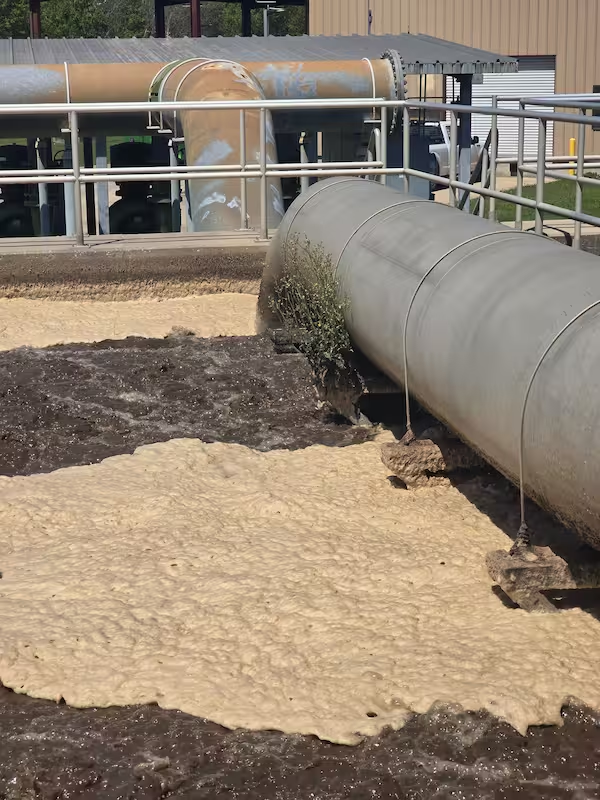
Foam could reflect very different biological or influent conditions.
That is why effective troubleshooting works best as a decision tree:
Symptom → observation → measurement → possible causes → additional check → root cause → corrective action.
Each answer should narrow the possibilities until the operator has enough evidence to act.
This approach also helps reduce unnecessary process adjustments.
Build a Wastewater Troubleshooting Log
One of the most valuable troubleshooting tools is not a new sensor or laboratory test.
It is a good operating history.
Create a troubleshooting log containing:
- Date and time
- Initial symptom
- Process conditions
- Weather
- Influent flow
- Relevant laboratory results
- Equipment status
- Observations
- Probable cause
- Action taken
- Process response
- Time required for recovery
- Confirmed root cause, if identified
Over time, these records can help operators recognize recurring patterns.
For example:
“Every major rainfall event produces a sludge-blanket increase four hours later.”
or:
“Effluent ammonia begins increasing whenever winter aeration-basin temperature reaches a particular range.”
Plant-specific information like this can become extremely valuable for future shifts and new operators.
Troubleshooting Is a Team Skill
The best wastewater treatment plants do not keep troubleshooting knowledge with only one experienced operator.
When operators document process upsets, explain how they diagnosed them, and share the reasoning behind corrective actions, troubleshooting becomes part of the facility's institutional knowledge.
That is especially valuable when:
- Experienced operators retire
- New operators join the plant
- Operators move between shifts
- Unusual process conditions occur
- A problem has not appeared for several years
Improve Your Wastewater Treatment Troubleshooting Skills
Reading about troubleshooting is useful. Practicing the decision-making process is even more important.
Watura's Troubleshooting in a Wastewater Treatment Plant course is designed for certified wastewater operators and maintenance technicians who want to develop a more systematic approach to diagnosing treatment problems.
The training covers:
- Troubleshooting methodology
- Hydraulic overload
- Shock loads
- Filamentous bacteria
- Foaming in aeration tanks
- Bulking sludge
- High effluent TSS
- Low dissolved oxygen
- Loss of nitrification
- Pump failures
Operators work through practical situations and decision trees designed to reinforce the connection between symptoms, process data, root causes, and corrective actions.
Explore Watura's Troubleshooting in a Wastewater Treatment Plant course
Operators can also continue building their wastewater process knowledge with Watura's Stages of Wastewater Treatment and Operating Procedures of an Activated Sludge WWTP courses.
Frequently Asked Questions About Wastewater Treatment Troubleshooting
- What is the first step in troubleshooting a wastewater treatment plant?
- Clearly define the symptom and determine when it began. Then review operating data to identify what changed before the problem appeared. Avoid adjusting several operating parameters simultaneously before identifying likely causes.
- What causes high TSS in wastewater effluent?
- High effluent TSS can result from several conditions, including hydraulic overload, poor sludge settling, bulking, excessive clarifier solids inventory, biological upset, or other solids-separation problems. Operators should inspect both biological-process conditions and secondary-clarifier performance before selecting a corrective action.
- What causes sludge bulking?
- One important cause is excessive filamentous growth, which can prevent activated sludge from settling and compacting effectively. Because different process conditions can favor different filamentous organisms, operators should combine settleability data, process conditions, and microscopic examination when diagnosing bulking.
- What causes low dissolved oxygen in an aeration tank?
- Low DO can occur when oxygen demand increases or when the aeration system cannot transfer enough oxygen. Potential factors include increased organic or ammonia loading, high flows, blower problems, clogged diffusers, valve settings, or insufficient aeration capacity.
- What causes a wastewater plant to lose nitrification?
- Common factors include low DO, low temperature, insufficient solids retention time, low alkalinity, unfavorable pH, increased ammonia loading, hydraulic overload, loss of biomass, and toxic or inhibitory compounds.
- How can operators troubleshoot high effluent ammonia?
- Determine where ammonia begins increasing, then evaluate the conditions needed for nitrification, including DO, temperature, alkalinity, pH, SRT, loading, and possible inhibition. Comparing ammonia at multiple process locations can help isolate the affected treatment stage.
- Determine where ammonia begins increasing, then evaluate the conditions needed for nitrification, including DO, temperature, alkalinity, pH, SRT, loading, and possible inhibition. Comparing ammonia at multiple process locations can help isolate the affected treatment stage.
- What causes foaming in an activated sludge plant?
- Foam can have several causes, including startup conditions, biological population changes, filamentous organisms, sludge-age conditions, and wastewater characteristics such as fats, oils, and grease. The foam's appearance and persistence should be evaluated alongside process and microscopic data.
- What should wastewater operators monitor when troubleshooting?
- Useful parameters may include flow, BOD or COD, TSS, ammonia, nitrate, pH, alkalinity, DO, MLSS, SVI, sludge blanket depth, RAS/WAS flows, sludge age, temperature, equipment status, and rainfall. The correct combination depends on the problem and treatment process.
- Why is wastewater treatment troubleshooting important?
- Early identification of process problems can help operators protect treatment performance, maintain effluent quality, reduce unnecessary process changes, identify equipment problems, and respond to operating conditions before they develop into larger upsets.
Additional Wastewater Troubleshooting Resources
For operators who want to go deeper into activated sludge process control and troubleshooting:
- U.S. EPA: Activated Sludge Process Control and Troubleshooting Manual
Covers systematic process troubleshooting, ammonia, temperature, alkalinity, dissolved oxygen, sludge settleability, and secondary clarification.
Read the EPA troubleshooting manual - U.S. EPA: Peak Flows at Sewage Treatment Plants
Explains how wet-weather flows and inflow and infiltration can affect treatment capacity and biological processes.
Read EPA guidance on peak flows - U.S. EPA: Causes and Control of Activated Sludge Bulking and Foaming
Provides detailed information about settling problems, filamentous microorganisms, bulking, and foam.
Read the EPA bulking and foaming report
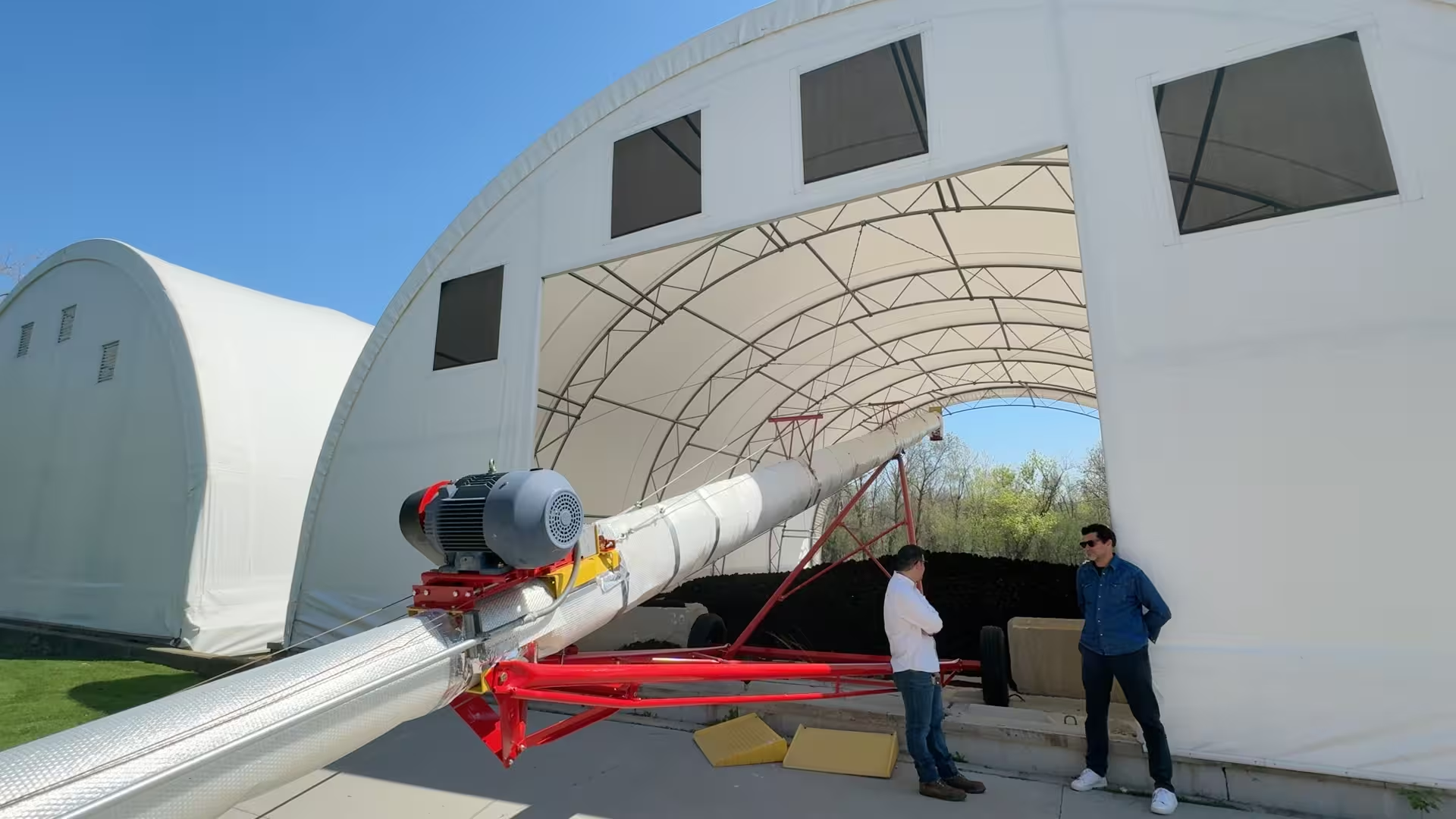
From Sludge to Strategy: Why Solids Handling Is Becoming a Critical Skill in Wastewater Treatment
Solids handling affects far more than sludge disposal. It influences plant capacity, dewatering costs, odor control, regulatory risk, agricultural reuse, and public trust. This article explores why solids treatment is becoming one of the most strategic areas of wastewater operations, and why effective training is critical for both new and experienced professionals.


California Water & Wastewater Operator Training: CEUs, CWEA Certifications, Contact Hours & Renewal
The training you need depends on the credential you hold. A California drinking water operator follows different renewal rules than a wastewater treatment operator, and a collections or maintenance professional with a CWEA certification follows another set of requirements. This guide explains California water operator training, wastewater operator training, CEUs, contact hours, educational points, certification renewal, and CWEA certifications in practical terms for operators and supervisors.


Why Regular Training Matters for Colorado Water and Wastewater Operators
For Colorado water and wastewater operators, training is more than a certification requirement. It is an essential part of maintaining technical knowledge, adapting to changing regulations, improving operational performance, and protecting public health.

A Practical Guide to Implementing Watura for Operator Training and Compliance
Implementing a new training platform across a utility is about more than giving employees access to online courses. It is about creating a structured, sustainable training program that supports compliance, strengthens operational knowledge, and helps employees grow throughout their careers.Whether your utility wants to simplify CEU renewal, onboard new operators, prepare staff for certification exams, or standardize training across departments, a successful rollout starts with preparation. Before implementing Watura for your team, there are a few key decisions that can make the process smoother, more organized, and far more effective in the long run.

AI in Water Utilities: A Practical Introduction for Operators and Decision-Makers
Water and wastewater professionals are facing a perfect storm. Aging infrastructure, stricter regulations, climate uncertainty, and workforce shortages are all converging at once. At the same time, utilities are generating more data than ever before, yet much of it remains underused. And then there is artificial intelligence. It is everywhere in the news, embedded in software, and increasingly present in operational tools. But for many operators and utility leaders, one question remains unanswered: What does AI actually mean for my day-to-day work? This article cuts through the noise. It explains how AI is already impacting water utilities, what key concepts you need to understand, and how you can start using it today. It also introduces a new free course, AI 101 for Water Professionals, developed by Watura in collaboration with WEF, Amazon, and the Water Center at the University of Pennsylvania.

Why Tracking CEUs is Critical for Water and Wastewater Operators
This article explains why CEU tracking is essential for water and wastewater operators to maintain valid licenses, meet regulatory requirements, and avoid compliance risks, while introducing Watura’s free CEU Tracker for managing and documenting CEUs in one centralized system.
Wastewater Treatment Troubleshooting: Common Problems, Causes & Operator Checks
Effective wastewater treatment troubleshooting starts by recognizing those clues, collecting the right process data, and identifying the root cause before changing operating conditions.