Water Operator Math: The Formulas You Need for Your Certification Exam

Water math is the set of calculations operators use to run treatment plants, distribution systems and wastewater facilities: flow rates, volumes, detention time, chemical dosage, loading rates, pressure and pump horsepower. Most of it comes down to a short list of formulas and three numbers you will use in almost every problem: 7.48 gallons per cubic foot, 8.34 pounds per gallon of water and 0.785 for circle areas.
Key takeaways
- Water math comes down to a short list of formulas and three constants: 7.48 gal/ft³, 8.34 lb/gal and 0.785
- Use the pounds formula, lb/day = dose (mg/L) × flow (MGD) × 8.34, for chlorine, coagulant, BOD and solids problems
- Convert units first: 1 MGD = 694 gpm, 1 psi = 2.31 ft of head, 1 ft³ = 7.48 gal
- Divide by purity when a chemical is not 100% active, and use the diameter with 0.785
- Check every answer against the plant described: a 400-hour clarifier detention time means the setup is wrong.
The conversion factors behind almost every water math problem
Many exam questions are unit conversions with a single formula in the middle. Knowing where these values sit on your conversion/formula table helps you solve problems faster and catch your own mistakes.
Tip: Many certification exams, including those built on ABC (Association of Boards of Certification) standards, give you a conversion/formula table. Check with your state certification program what you will receive on test day. Even with a conversion/formula table, knowing where each value sits on it saves time.
A 5-step method for setting up water math problems
Operators who struggle with math often know the formulas and lose points on setup. Use the same five steps on every problem:
- Write down the data given, with units (for example: flow = 2.5 MGD, dose = 3 mg/L)
- Identify what you are asked to find (for example: lb/day)
- Pick the formula from your conversion/formula table that links the known values to the unknown
- Convert units first so everything matches the formula (MGD with MGD, gallons with gallons, feet with feet)
- Solve step by step, then check the answer makes sense. A detention time of 400 hours for a clarifier or a chlorine feed of 5,000 lb/day for a small town tells you something went wrong
Flow rate formulas
Flow from area and velocity (Q = A × V)
Q = A × V
Q = flow (ft³/s)
A = cross-sectional area (ft²)
V = velocity (ft/s)
Example. A rectangular channel is 2 ft wide, water is 1.5 ft deep and moves at 2 ft/s. What is the flow in gpm and MGD?
- A = 2 ft × 1.5 ft = 3 ft²
- Q = 3 ft² × 2 ft/s = 6 cfs
- 6 cfs × 448.8 = 2,693 gpm
- 6 cfs × 0.646 = 3.88 MGD
For a full pipe, the area is 0.785 × D², with the diameter in feet. An 8 in. pipe is 0.667 ft, not 8 ft.
Our guide to the water flow rate formula has more worked problems for pipes and channels.
Converting MGD, gpm and cfs
gpm = MGD × 694
MGD = gpm × 1,440 ÷ 1,000,000
cfs = MGD × 1.55
Example. A plant treats 1.2 MGD. What is the flow in gpm?
1.2 MGD × 694 = 833 gpm (832.8 gpm before rounding)
You will meet this conversion on its own and inside larger problems. Our MGD to gpm conversion guide covers it in more detail.
Volume formulas for tanks, basins and pipes
Rectangular tank: V (ft³) = length × width × depth
Cylindrical tank: V (ft³) = 0.785 × diameter² × height
Pipe: V (ft³) = 0.785 × diameter² × length
Gallons: gal = ft³ × 7.48
Example. A round storage tank is 40 ft in diameter with 20 ft of water. How many gallons does it hold?
- V = 0.785 × 40² × 20 = 0.785 × 1,600 × 20 = 25,120 ft³
- 25,120 × 7.48 = 187,898 gallons (about 188,000 gal)
Watch out: square the diameter, not the radius. If you use the radius, the formula is π × r² (3.14 × r²), not 0.785.
Detention time formula
Detention time is how long, on average, water stays in a tank or basin. It matters for sedimentation, disinfection contact and clarifier performance.
Detention time = Volume ÷ Flow
The volume and flow units must match: gallons with gallons per hour gives hours; gallons with gallons per minute gives minutes.
Example. A sedimentation basin is 60 ft long, 20 ft wide and 12 ft deep. Flow is 1.5 MGD. What is the detention time in hours?
- Volume = 60 × 20 × 12 = 14,400 ft³ × 7.48 = 107,712 gal
- Flow = 1,500,000 gal/day ÷ 24 = 62,500 gal/hr
- Detention time = 107,712 ÷ 62,500 = 1.72 hours (about 103 minutes)
The same formula applies to chlorine contact tanks and aeration basins, with more examples in our detention time formula guide.
The pounds formula: chemical dosage and feed rates
The pounds formula converts a concentration in mg/L and a flow in MGD into a weight per day. You use it in chlorination, coagulant dosing, solids loading and BOD (biochemical oxygen demand) problems, and you divide by the product's purity as a decimal when you calculate product feed.
lb/day = Dose (mg/L) × Flow (MGD) × 8.34
Why 8.34? One gallon of water weighs 8.34 lb, so 1 mg/L in 1 million gallons equals 8.34 lb.
Example. You need to dose 3 mg/L of chlorine into a flow of 2.5 MGD. How many pounds of chlorine per day?
3 × 2.5 × 8.34 = 62.6 lb/day
Adjusting for chemical purity
The pounds formula gives you pounds of pure chemical. If the product is not 100% active, divide by its purity:
lb/day of product = lb/day of pure chemical ÷ purity (decimal)
On the conversion/formula table, this appears as a single feed rate formula: lb/day = dose (mg/L) × flow (MGD) × 8.34 ÷ purity (decimal).
Example. Using calcium hypochlorite (HTH) at 65% available chlorine for the dose above:
62.55 ÷ 0.65 = 96.2 lb/day of HTH (use the unrounded 62.55 to avoid rounding errors)
Watch out: divide by the purity, never multiply. A weaker product means you need more of it, so the answer must go up.
Chlorine dose, demand and residual
Chlorine dose = Chlorine demand + Chlorine residual
Example. You dose 4.0 mg/L and measure a residual of 0.6 mg/L. The chlorine demand is 4.0 − 0.6 = 3.4 mg/L.
Demand and residual do not rise in a straight line as you add chlorine, and breakpoint chlorination explains why. pH also changes how effective your residual is, one of the topics in our course on disinfection in drinking water treatment.
Water treatment math: loading rates
Surface overflow rate
Surface overflow rate (SOR) tells you how much flow each square foot of a clarifier or sedimentation basin handles.
SOR (gpd/ft²) = Flow (gpd) ÷ Surface area (ft²)
Example. A circular clarifier is 50 ft in diameter and receives 1.8 MGD.
- Area = 0.785 × 50² = 1,962.5 ft²
- SOR = 1,800,000 ÷ 1,962.5 = 917 gpd/ft²
Filter loading rate
Filter loading rate (gpm/ft²) = Flow (gpm) ÷ Filter surface area (ft²)
Example. A filter is 20 ft × 25 ft and receives 2,000 gpm.
- Area = 500 ft²
- Loading rate = 2,000 ÷ 500 = 4 gpm/ft²
The same formula works for backwash rate, using the backwash flow instead of the filtration flow. Expect loading rate, detention time and chemical dosing problems on any water treatment exam. The practice tests in our water treatment exam prep for Grade I to III cover all three.
Water distribution math: pressure and pumps
Converting psi and feet of head
psi = feet of head × 0.433
feet of head = psi × 2.31
Example 1. A tank's water level is 120 ft above a hydrant. The static pressure at the hydrant is 120 × 0.433 = 52 psi.
Example 2. A gauge reads 65 psi. That equals 65 × 2.31 = 150 ft of head. Hydraulics questions like these also appear in our water distribution exam prep, next to storage tanks, meters and hydrants.
Pump horsepower
Water horsepower (whp) = Flow (gpm) × Total head (ft) ÷ 3,960
Brake horsepower (bhp) = whp ÷ Pump efficiency
Motor horsepower (mhp) = bhp ÷ Motor efficiency
Example. A pump delivers 500 gpm against 100 ft of total dynamic head. Pump efficiency is 75% and motor efficiency is 90%.
- whp = 500 × 100 ÷ 3,960 = 12.6 hp
- bhp = 12.6 ÷ 0.75 = 16.8 hp
- mhp = 16.8 ÷ 0.90 = 18.7 hp
Watch out: each efficiency step makes the horsepower bigger, because losses mean the motor must supply more power than the water receives. Pump and motor efficiencies usually fall between 70% and 95%. A value outside that range is a sign to recheck your numbers. On a real pump, wear and misalignment push pump efficiency down over time. Our course on inspection and maintenance of centrifugal pumps shows how to spot both early.
Wastewater math formulas
Wastewater exams add process control calculations on top of the flow, volume and pounds formulas above. You can practice them with randomized tests in our wastewater exam prep for Grade I to III.
Percent removal efficiency
% removal = (Influent − Effluent) ÷ Influent × 100
Example. Influent BOD is 220 mg/L and effluent BOD is 15 mg/L.
(220 − 15) ÷ 220 × 100 = 93.2% removal
F/M ratio
The food-to-microorganism ratio compares the BOD load entering the aeration tank with the biomass available to treat it.
F/M = BOD load (lb/day) ÷ MLVSS (lb)
Example. Primary effluent BOD is 150 mg/L at 2.0 MGD. The aeration tank holds 0.5 MG with a mixed liquor volatile suspended solids (MLVSS) concentration of 2,000 mg/L.
- BOD load = 150 × 2.0 × 8.34 = 2,502 lb/day
- MLVSS = 2,000 × 0.5 × 8.34 = 8,340 lb
- F/M = 2,502 ÷ 8,340 = 0.30
Notice that the pounds formula appears twice: once with flow, once with tank volume in MG. Combined problems like this one are typical at Grade III and are the focus of our Math for Operators Grade III course.
Sludge volume index (SVI)
SVI (mL/g) = Settled sludge volume after 30 min (mL/L) × 1,000 ÷ MLSS (mg/L)
Example. After 30 minutes, the sludge settles to 250 mL/L. The mixed liquor suspended solids (MLSS) concentration is 2,500 mg/L.
250 × 1,000 ÷ 2,500 = SVI of 100 mL/g
The most common water math mistakes on exam day
- Mixing units. Gallons with cubic feet, MGD with gpm, inches with feet. Convert before you calculate
- Using radius with 0.785. The 0.785 shortcut works with the diameter only
- Multiplying by purity or using a percentage. For a product at 65%, divide by 0.65, not by 65
- Forgetting the 8.34. If a problem gives mg/L and asks for lb/day, the pounds formula is almost always involved
- Rounding too early. Keep full numbers until the last step, then round
- Not checking the answer. Ask yourself whether the result is realistic for the plant described
Check units, purity and rounding before you repeat a calculation. Our water math courses review Grade I to III calculations step by step.
Water math FAQ
- Is there a lot of math on the water operator exam?
- Math appears on every level of water treatment, distribution and wastewater exams, and the problems get more complex as the grade goes up. Grade I exams focus on conversions, volume, flow and the pounds formula. Higher grades add process control calculations such as the F/M ratio, loading rates and pump efficiency. Your state certification program publishes the topics covered by each exam.
- Do you get a conversion/formula table on the exam?
- Many exams provide one. ABC/WPI exams, used by a large number of states, include a conversion/formula table. Some state-developed exams have their own table or none. Check your state program's candidate handbook before test day and practice with the same table you will receive.
- Can you use a calculator on the water operator exam?
- In most cases, yes, but rules vary. Check your certification program's candidate handbook for calculator rules and approved models before exam day.
- What is the pounds formula in water treatment?
- The pounds formula is lb/day = dose (mg/L) × flow (MGD) × 8.34. It converts a concentration into the weight of chemicals or solids per day. It is used for chlorine feed, coagulant dosage, BOD and solids loading.
- Why is 8.34 used in water math?
- One gallon of water weighs 8.34 pounds. Because 1 mg/L means 1 part per million, 1 mg/L in 1 million gallons equals 8.34 pounds. That is why 8.34 links mg/L, MGD and lb/day.
- How do I get better at water math quickly?
- Practice a few problems every day instead of cramming. Use the same 5-step method each time, get familiar with your conversion/formula table and time yourself on practice tests so you get used to the exam pace. If math is your weak point, answer the non-math questions first, then come back to the calculations. Most jurisdictions require 70% to pass.
Practice water math before exam day
Reading formulas is a start. Passing the exam takes practice with real exam-style questions, under time pressure. If you are preparing for a Grade I exam, start with our Grade I operator math course and work through the formulas above until they become automatic.

Water Operator Math: The Formulas You Need for Your Certification Exam
Water math is the set of calculations operators use to run treatment plants, distribution systems and wastewater facilities: flow rates, volumes, detention time, chemical dosage, loading rates, pressure and pump horsepower. Most of it comes down to a short list of formulas and three numbers you will use in almost every problem: 7.48 gallons per cubic foot, 8.34 pounds per gallon of water and 0.785 for circle areas.
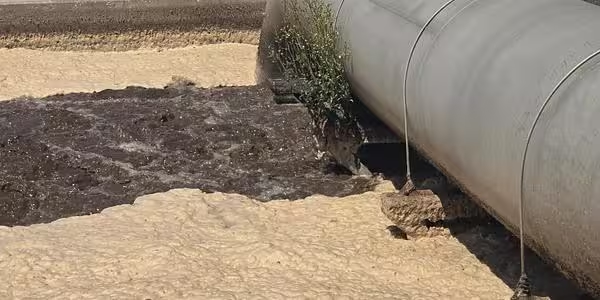
Wastewater Treatment Troubleshooting: Problems, Causes & Checks
Effective wastewater treatment troubleshooting starts by recognizing those clues, collecting the right process data, and identifying the root cause before changing operating conditions.
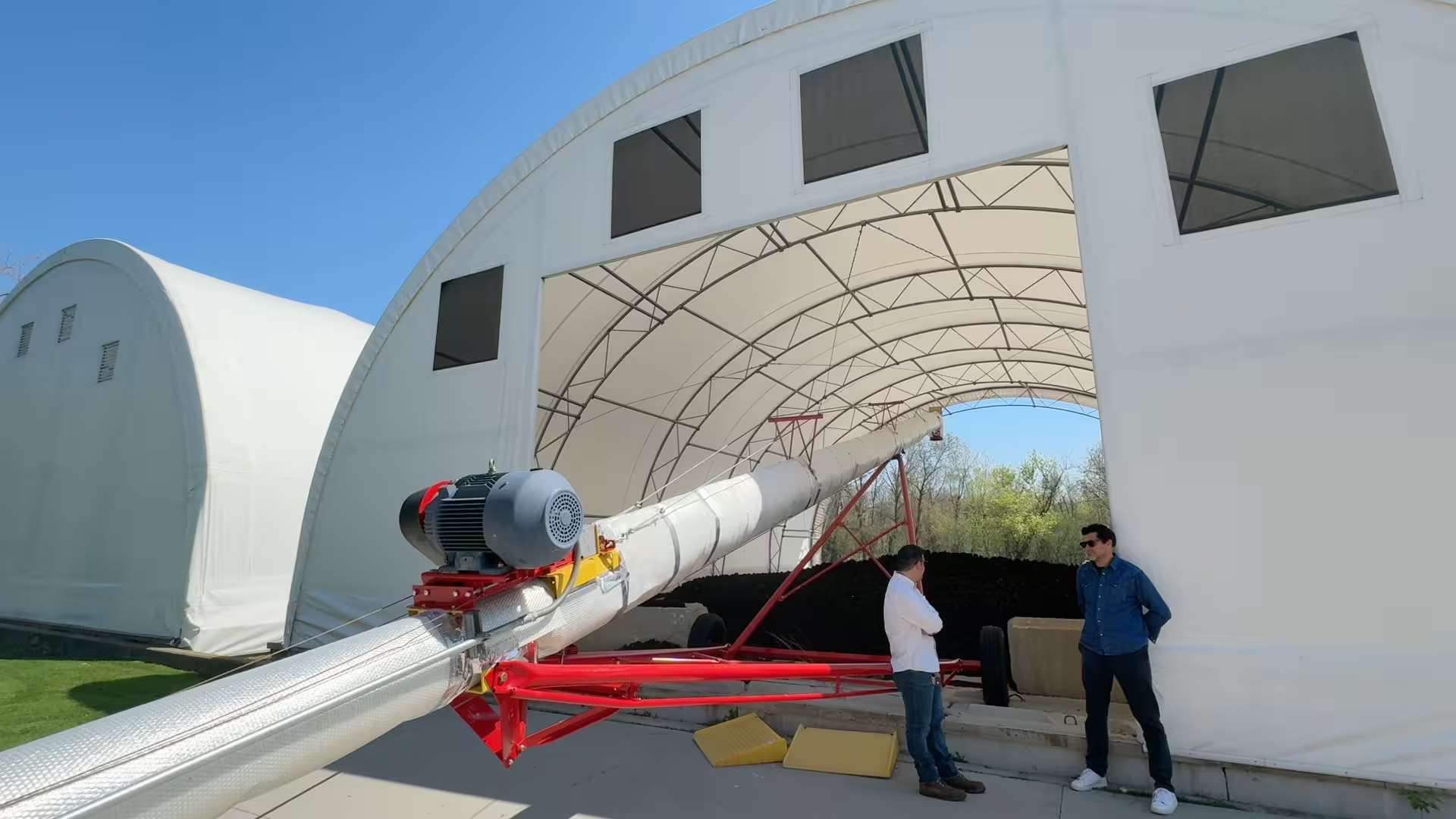
From Sludge to Strategy: Why Solids Handling Is a Critical Skill
Solids handling affects far more than sludge disposal. It influences plant capacity, dewatering costs, odor control, regulatory risk, agricultural reuse, and public trust. This article explores why solids treatment is becoming one of the most strategic areas of wastewater operations, and why effective training is critical for both new and experienced professionals.


Why Regular Training Matters for Colorado Water Operators
For Colorado water and wastewater operators, training is more than a certification requirement. It is an essential part of maintaining technical knowledge, adapting to changing regulations, improving operational performance, and protecting public health.


A Practical Guide to Implementing Watura for Operator Training
Implementing a new training platform across a utility is about more than giving employees access to online courses. It is about creating a structured, sustainable training program that supports compliance, strengthens operational knowledge, and helps employees grow throughout their careers.Whether your utility wants to simplify CEU renewal, onboard new operators, prepare staff for certification exams, or standardize training across departments, a successful rollout starts with preparation. Before implementing Watura for your team, there are a few key decisions that can make the process smoother, more organized, and far more effective in the long run.


Why Tracking CEUs is Critical for Water and Wastewater Operators
This article explains why CEU tracking is essential for water and wastewater operators to maintain valid licenses, meet regulatory requirements, and avoid compliance risks, while introducing Watura’s free CEU Tracker for managing and documenting CEUs in one centralized system.

California Water & Wastewater Operator Training: CEUs, CWEA Certifications, Contact Hours & Renewal
The training you need depends on the credential you hold. A California drinking water operator follows different renewal rules than a wastewater treatment operator, and a collections or maintenance professional with a CWEA certification follows another set of requirements. This guide explains California water operator training, wastewater operator training, CEUs, contact hours, educational points, certification renewal, and CWEA certifications in practical terms for operators and supervisors.
AI in Water Utilities: A Practical Introduction for Operators and Decision-Makers
Water and wastewater professionals are facing a perfect storm. Aging infrastructure, stricter regulations, climate uncertainty, and workforce shortages are all converging at once. At the same time, utilities are generating more data than ever before, yet much of it remains underused. And then there is artificial intelligence. It is everywhere in the news, embedded in software, and increasingly present in operational tools. But for many operators and utility leaders, one question remains unanswered: What does AI actually mean for my day-to-day work? This article cuts through the noise. It explains how AI is already impacting water utilities, what key concepts you need to understand, and how you can start using it today. It also introduces a new free course, AI 101 for Water Professionals, developed by Watura in collaboration with WEF, Amazon, and the Water Center at the University of Pennsylvania.