Water Reuse: Why It Matters, How It Works, and Where It’s Headed

Water scarcity is not a future problem: it's happening now. As populations rise and freshwater supplies tighten, utilities and industries must secure reliable, sustainable water sources. One of the most practical solutions is water reuse. Recycled water does more than irrigate parks. Wth modern treatment technologies, wastewater can be reused to irrigate crops, recharge aquifers, power industrial processes, and even enter drinking water systems. The key question is simple: How do we treat wastewater enough to make it safe to reuse?
Water Reuse: Why It Matters, How it Works, and Where It's Headed
Why Water Reuse Is Becoming Essential
Across the United-States and around the world, water systems face mounting pressure. Droughts are becoming more frequent, groundwater levels continue to drop, infrastructure is aging. At the same time, utilities discharge millions of gallons of treated wastewater each day.
Water reuse changes that math. Instead of discarding treated effluent, utilities capture it, treat it to the right standard, and put it back to work. The result: stronger reliability, lower environmental impact, and better drought resilience. No surprise more utilities are exploring or expanding reuse programs.
The Five Most Common Applications of Water Reuse
Water reuse is not one-size-fits-all. Different applications demand different water quality and different treatment processes. Here are the five most common uses you'll see in the field.
1. Agricultural Irrigation
Agricultural and green-space maintenance are among the largest water users, making them prime opportunities for water reuse. When treated to the right standards, reused water reliably supports parls and landscape irrigation, roadside vegetation, orchards and vineyards, pasture and fodder crops, and golf courses.
Communities across the US already rely on these systems. St. Petersburg, Florida operates one of the nation's longest-running reuse programs, delivering recycled water to parks, schools, and golf courses.
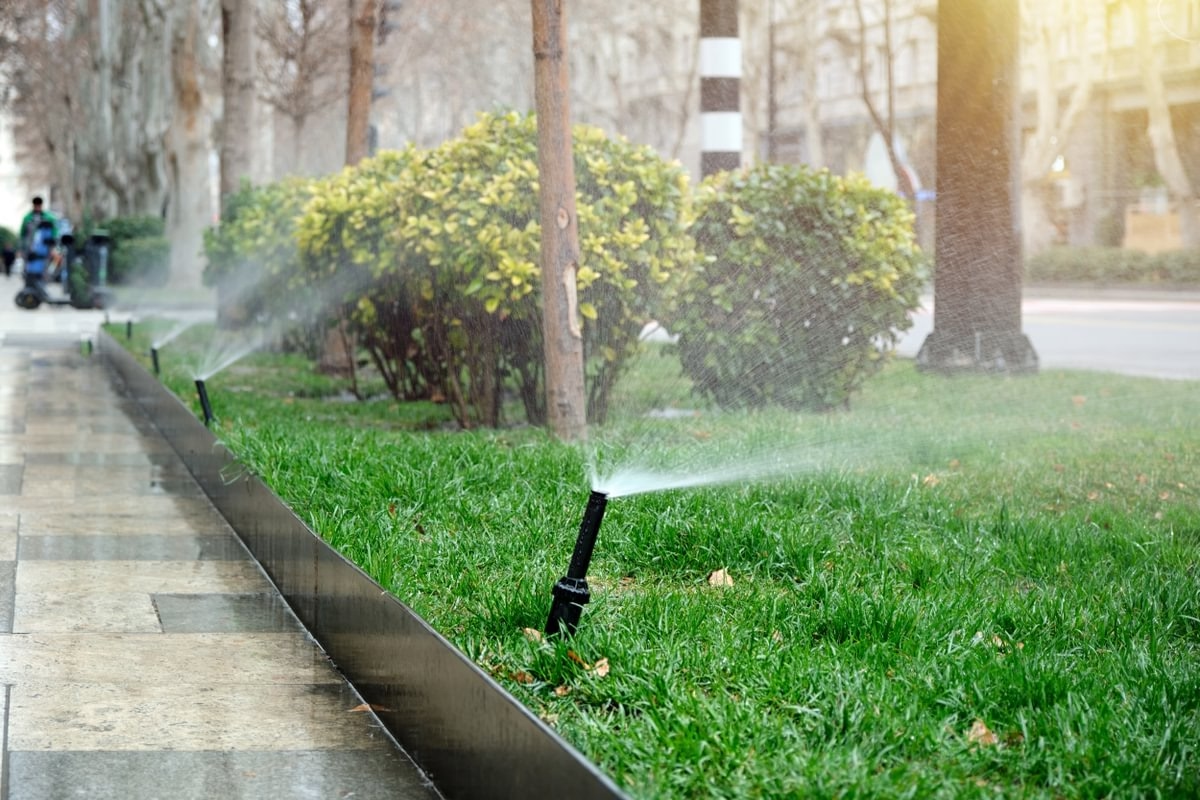
In California's Napa Valley, recycled water from NapaSan helps vineyards maintain production through dry seasons.
Even small towns, like Oswego, Kansas, use treated wastewater to irrigate their municipal golf course.
For operators, the priorities remain pathogen control, salinity management, and nutrient balance. When these are handled properly, reused water reduces demand on potable supplies and delivers a stable irrigation source year-round.
2. Industrial Reuse
Industrial facilities depend on steady water supplies for cooling, steam generation, and cleaning. Recycled water can replace potable awter in boiler feedwater, cooling towers, process water, and equipment washdown.
Many plants already use reused water at scale. For example, the Polk Power Station in Florida uses treated reused water as its primary cooling water source, reducing strain on scarce freshwater supplies.
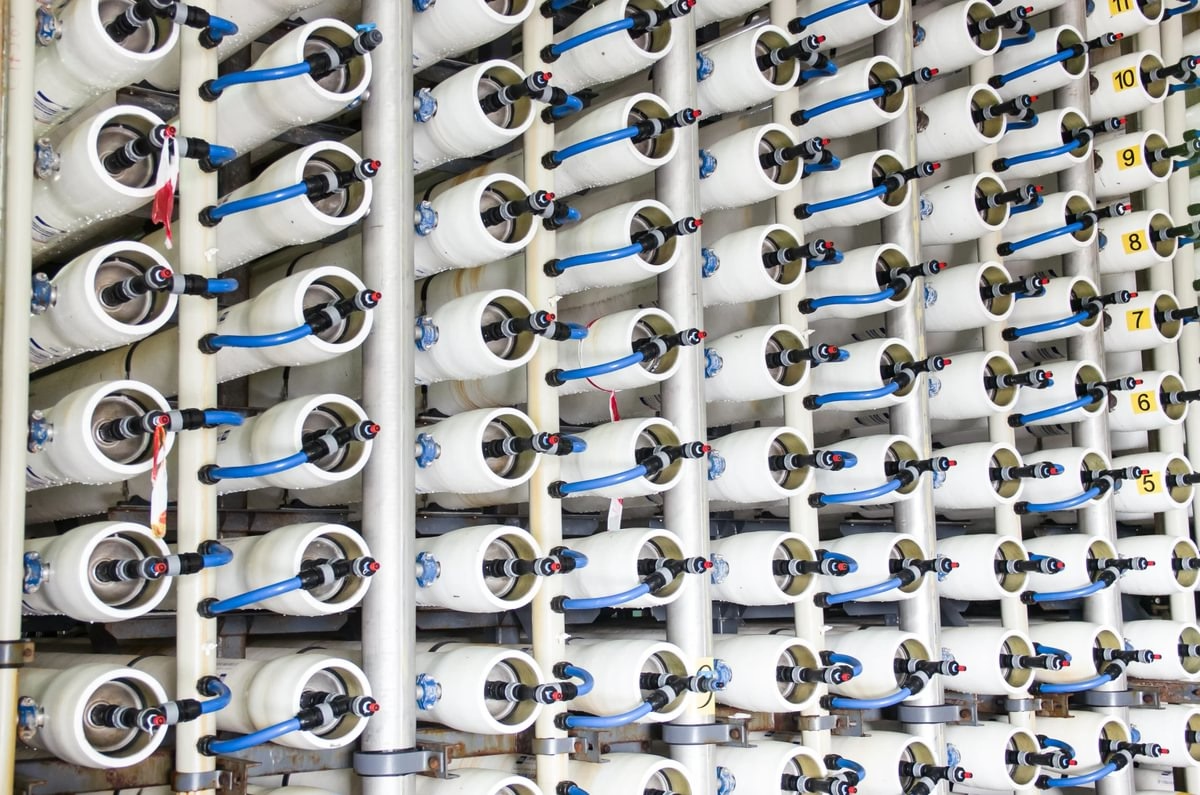
These applications typically need water low in total dissolved solids (TDS) and free of troublesome organics. If contaminants remain, they can cause corrosion, scaling, and biological fouling. High-quality treatment (often including microfiltration and reverse osmosis (RO)) helps avoid those problems.
3. Groundwater Recharge (Indirect Potable Reuse)
In groundwater recharge (or Indirect Potable Reuse (IPR)), highly treated water is injected into aquifers to restore and protect water supplies. This process helps raise groundwater levels, enhance long-term security, protect aquifer integrity, and create buffers against drought and seawater intrusion. The environment in which reused water is released acts as an environmental buffer before it becomes part of the water supply. As the water moves through soil and geologic formations, natural processes such as filtration, adsorption, and biological degradation provide treatment.

Because aquifers are difficult to clean once polluted, groundwater recharge requirers exceptionally high-quality water. The Orange County Water District in California operates the Groundwater Replenishment System (GWRS), the world's largest water purification system for IPR. This system injects purified reuse water underground, blocking seawater intrusion and protecting inland drinking water wells.
When properly treated and managed, groundwater recharge offers a powerful long-term method to sustain water resources, especially in regions facing recurring drought of the risk of seawater intrusion.
4. Construction Uses
Construction projects often require substantial non-potable water for concrete mixing, dust suppression, surface cleaning, and equipment washdowns. Recycled water can fill that need.
Balcones Quarry in Texas, CEMEX installed a water-recycling system to supply its wash plant for cleaning aggregates used in concrete and asphalt. This upgrade reduces fresh water use dramatically, reducing water consumption by about 90% compared with prior operations.
Another example is Trio Ready-Mix, which implemented reused water in its concrete mixes under the CarbonCure for reused water program. They are replacing a part of the drinking water used in their mixes with recycled water. It reduces overall water demand and helps manage wash-water internally.
5. Direct Potable Reuse (DPR)
Direct Potable Reuse (DPR) feeds purified recycled water directly into the drinking water distribution system. DPR is technically feasible today and increasingly adopted, but safety is paramount. Water must meet Safe Drinking Water Act (SDWA) requirements as well as state-specific standards.
Big Spring, Texas, recently began injecting treated effluent into its water supply, relying on advanced treatment to ensure safety.
DPR provides benefits only when implemented with rigorous treatment, continuous monitoring, and a multi-barrier approach. Reused water passes through several treatment steps targeting microbiological, chemical, and physical contaminants. As no single process can eliminate all risks, having these multiple barriers provide more protection. If one treatment step underperforms or fails, others remain to maintain safety. This built-in redundancy strengthens overall resilience and reliability, ensuring consistently high water quality.
When it’s done right, DPR provides a drought-proof local supply and greater control over community water resources.
Treatment Processes Behind Water Reuse
Choosing the correct treatment path depends on the intended use. Contaminant types, biodegradability, toxicity, and regulatory limits all shape the treatment process. Broadly, treatments fall into two categories: advanced and conventional.
Advanced Treatment for High-Purity Needs
Advanced treatment is required when water must be treated to near drinking-water quality—examples include DPR, IPR, and some industrial uses. A typical advanced treatment includes:
- Microfiltration (MF) or Membrane Bioreactor (MBR): removes suspended solids, bacteria, and protozoa. MBRs combine biological treatment with membrane filtration for very clean effluent.
- Reverse Osmosis (RO): removes dissolved salts, heavy metals, viruses, fluoride compounds, pharmaceuticals, and many organic micropollutants. RO produces very low-TDS water.
- Advanced Oxidation Processes (AOPs): use UV, ozone, or hydrogen peroxide to break down persistent organics and remaining trace contaminants.
- pH Adjustment: ensures the finished water meets regulatory and distribution compatibility requirements.
For some industrial boiler feeds, MF + RO may be sufficient since these steps remove most scale-forming and corrosive constituents.
Conventional Treatment for Non-Potable Uses
Conventional treatment meets the needs of irrigation, construction, and many industrial applications. It typically includes:
- Clarification: settles or aggregates suspended solids.
- Filtration: removes finer particles and reduces turbidity.
- Disinfection: kills pathogens with chlorine, UV, or ozone.
This approach reliably produces pathogen-reduced, pH-stable water fit for non-potable use. It’s cost-effective and widely applied where potable-quality treatment is unnecessary.
Real-World Impacts of Water Reuse
Water reuse offers tangible benefits:
- Reduced demand on freshwater sources by easing pressure on rivers and aquifers.
- Improved drought resilience through reliable local supplies.
- Environmental protection by decreasing effluent discharges and supporting healthier ecosystems.
- Lowers industrial costs through reduced freshwater purchases and wastewater disposal.
- Enhanced water security as communities gain more control over their resources.
As climate impacts intensify and populations grow, reuse will play an increasingly central role in utility planning and operations.
Conclusion: The Future of Water Depends on What We Reuse
Water reuse has moved from experimental to essential. Properly treated recycled water supports agriculture, industry, construction, aquifer recharge, and even drinking supplies. The right treatment, advanced or conventional, must align with the intended use and regulatory requirements to protect public health and infrastructure.
Key takeaways:
- Reuse covers diverse applications, each with specific water-quality needs.
- Advanced treatment (MF/MBR → RO → AOPs → pH control) serves potable and sensitive uses.
- Conventional treatment (clarification → filtration → disinfection) suits most non-potable needs.
- Matching treatment to purpose ensures safety, compliance, and cost-effectiveness.
Skills Operators Need to Run Water Reuse Facilities
Operating a water reuse system requires a specialized skill set. Operators must understand advanced treatment processes like MF, MBR, RO, and AOP, and know how to operate, monitor, and troubleshoot these technologies. Strong sampling, data interpretation, and instrumentation skills are essential, as is the ability to manage risks, ensure regulatory compliance, and maintain multi-barrier protection. As more utilities adopt reuse, operators who can confidently manage high-purity treatment and real-time monitoring will be increasingly in demand.
Final thought: As water scarcity grows, when will reuse shift from an option to the standard practice for every community?

Water Reuse: Why It Matters, How It Works, and Where It’s Headed
Water scarcity is not a future problem: it's happening now. As populations rise and freshwater supplies tighten, utilities and industries must secure reliable, sustainable water sources. One of the most practical solutions is water reuse. Recycled water does more than irrigate parks. Wth modern treatment technologies, wastewater can be reused to irrigate crops, recharge aquifers, power industrial processes, and even enter drinking water systems. The key question is simple: How do we treat wastewater enough to make it safe to reuse?

How US Water Utilities Can Solve the Workforce Crisis: 5 Strategies from ACE26
At ACE26 in Washington, D.C., I sat in on Christine Ow of Arcadis presenting "Designing the Future of Utility Workforce Development," one of the best sessions I caught all week (last-day sessions are an underrated find). Here's a summary: the sector faces interconnected pressures, from compensation and unclear career paths to an aging workforce, knowledge loss, culture challenges, and inaccessible training.

AI in Water Utilities: A Practical Introduction for Operators and Decision-Makers
Water and wastewater professionals are facing a perfect storm. Aging infrastructure, stricter regulations, climate uncertainty, and workforce shortages are all converging at once. At the same time, utilities are generating more data than ever before, yet much of it remains underused. And then there is artificial intelligence. It is everywhere in the news, embedded in software, and increasingly present in operational tools. But for many operators and utility leaders, one question remains unanswered: What does AI actually mean for my day-to-day work? This article cuts through the noise. It explains how AI is already impacting water utilities, what key concepts you need to understand, and how you can start using it today. It also introduces a new free course, AI 101 for Water Professionals, developed by Watura in collaboration with WEF, Amazon, and the Water Center at the University of Pennsylvania.
Capacity Building for Water and Wastewater Operators in the Dominican Republic
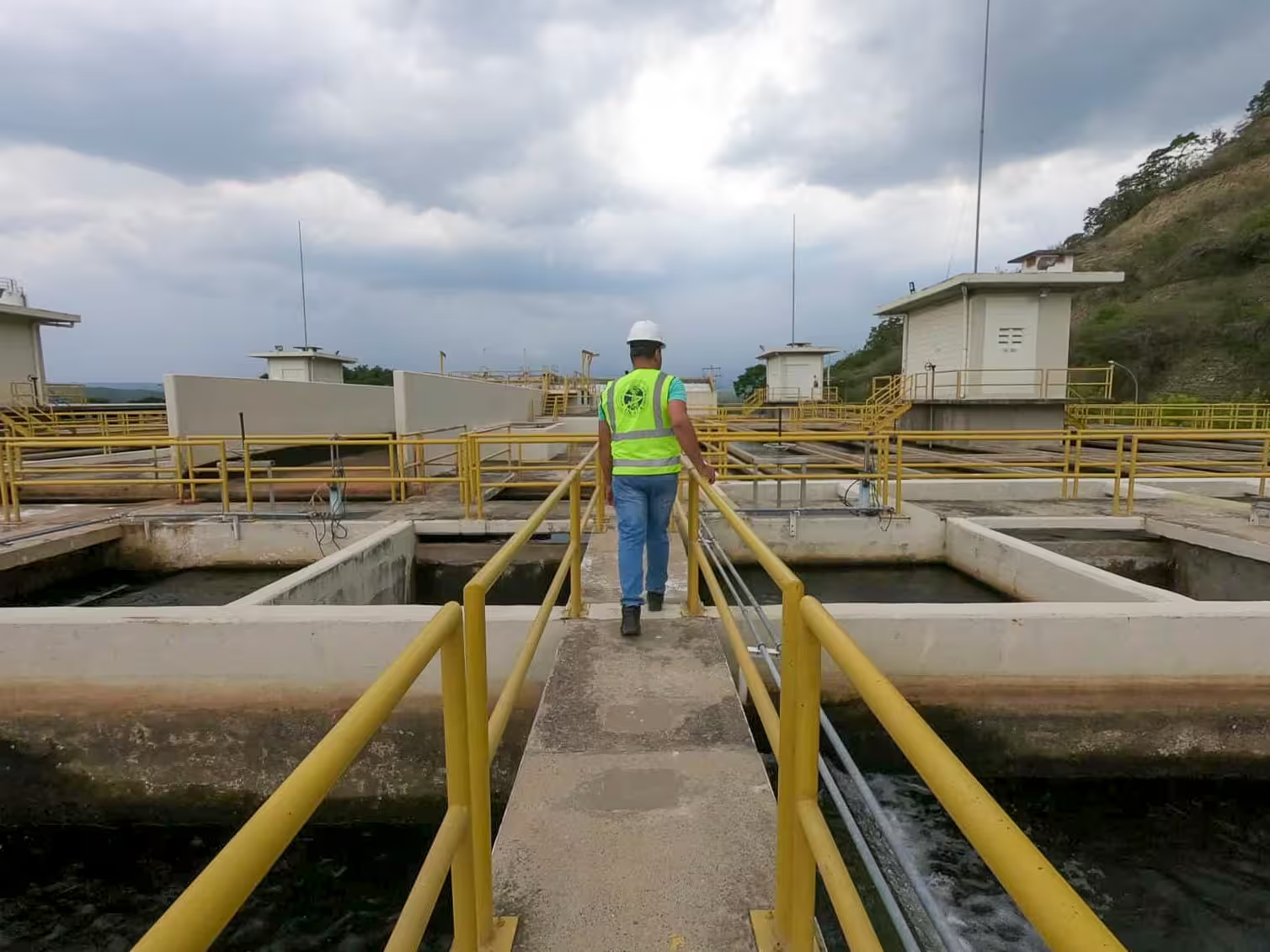
Watura, in partnership with INAPA (Instituto Nacional de Aguas Potables y Alcantarillados, National Institute of Drinking Water and Sewerage) and funded by the French Development Agency (AFD), is implementing a capacity building program in the Dominican Republic to strengthen the skills of water and wastewater operators, combining field-based training and digital learning to improve utility performance and service resilience.

The “Silver Tsunami” and the Future of Water Workforce
The water and wastewater sector faces critical workforce shortages. Watura provides flexible, expert-led training to help utilities close the gap.

Why Tracking CEUs is Critical for Water and Wastewater Operators
This article explains why CEU tracking is essential for water and wastewater operators to maintain valid licenses, meet regulatory requirements, and avoid compliance risks, while introducing Watura’s free CEU Tracker for managing and documenting CEUs in one centralized system.
.avif)

Addressing the Water Workforce Crisis with Microlearning and Adaptive Training for Operators
The water and wastewater industry is facing a unique challenge: a rapidly retiring workforce, the "Grey Tsunami", combined with accelerating training demands due to new regulations (PFAS, Reuse, Cybersecurity) and evolving technologies.